
JUST ANDERSEN: BETWEEN WEIGHT AND LIGHT
A vessel that seems heavier than its size suggests. A dark metal surface that gives an ordinary object the presence of sculpture. In the work of Danish designer Just Andersen (1884–1943), familiar forms acquire unexpected qualities. Moving between classical traditions and modern design, he explored how proportion, material and light could transform everyday objects into works of unexpected weight and presence.
From Greenland to Copenhagen
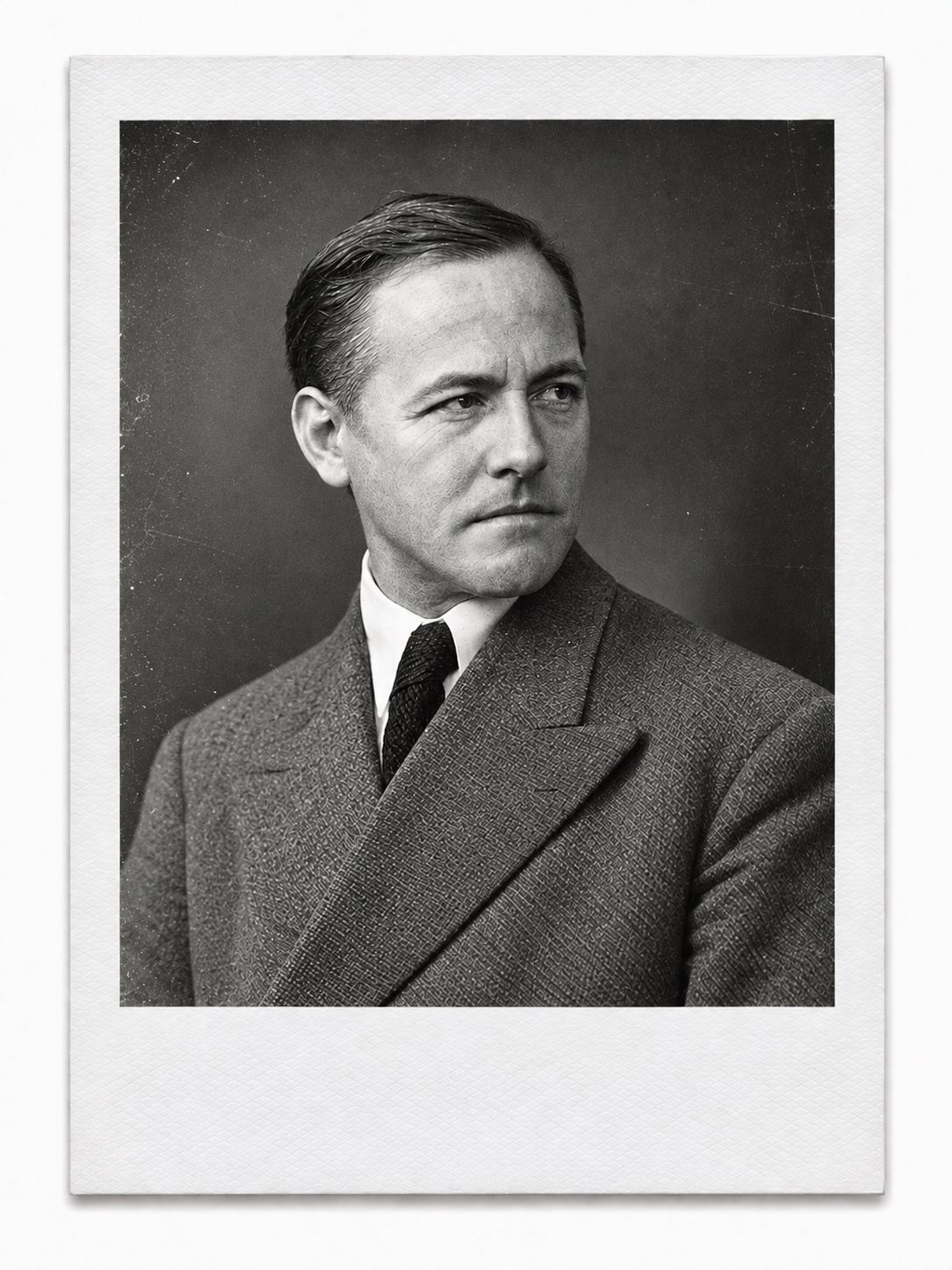
Born in 1884 in Godhavn, now Qeqertarsuaq, on Greenland’s Disko Island, Andersen spent the first decade of his life in a place whose name would later become closely associated with his work. His father served as an inspector in North Greenland before the family moved to Denmark, where Andersen eventually pursued an education spanning several artistic disciplines.
He trained as a decorative sculptor and later studied painting and sculpture at institutions including the Royal Danish Academy of Fine Arts and the School of Danish Arts and Crafts. Contact with the circle around Mogens Ballin introduced him to a Danish craft tradition in which design developed through an intimate understanding of materials and the techniques used to shape them.
Although Andersen worked across painting, sculpture and jewellery, metal offered a particularly versatile medium for his interests. After supplying designs to Copenhagen silversmiths, including A. Michelsen and P. Hertz, he established his own firm in 1918, creating a workshop where sculptural ideas could find expression in objects intended for daily use.
Together with his wife and collaborator Alba Andersen, a trained chaser, he produced jewellery and silverware alongside vessels, candlesticks, lamps and sculptural figures.
Between Classicism and Modernism
Andersen’s workshop emerged during a period of transition in Danish design. In the 1920s, classicism offered an alternative to the elaborate historicism of the previous century, favouring symmetry, measured proportions and a more restrained approach to ornament. For Andersen, these principles became a starting point for exploring new relationships between form, structure and material.
Rather than reproducing historical styles, he reinterpreted their underlying geometry. The column, the ancient vessel and the decorative use of fluting informed his designs, but their classical associations gradually gave way to a more abstract formal language. Ornament became increasingly integrated into the construction of the object itself.
As functionalism gained influence towards the end of the decade, Danish design moved further towards simplicity and the elimination of unnecessary decoration. Andersen’s work reflected aspects of this shift without fully embracing its ideals. His objects retained a sense of classical balance and sculptural expression, occupying a distinctive position between tradition and modernity.
Shaping Weight
For Just Andersen, the distinction between sculpture and everyday objects was never particularly clear. His early training in decorative sculpture informed an understanding of three-dimensional form, allowing him to move between the intimate scale of domestic objects and the more expansive language of sculpture.
Material played an equally important role in this exploration. Working with metals of different densities, textures and reflective qualities, Andersen investigated how the perception of weight could be altered through the interplay of form and surface.
Circles, cylinders, spheres and elongated curves recur throughout his work, but geometry was rarely an end in itself. Andersen used these elements to establish visual balance, sometimes introducing a deliberate tension between the apparent mass of an object and the slenderness of its support.
The resulting objects often suggest a scale beyond their actual dimensions. A small vessel might possess the monumentality of sculpture, its proportions recalling the stability and order of architectural forms.
A Metal of His Own
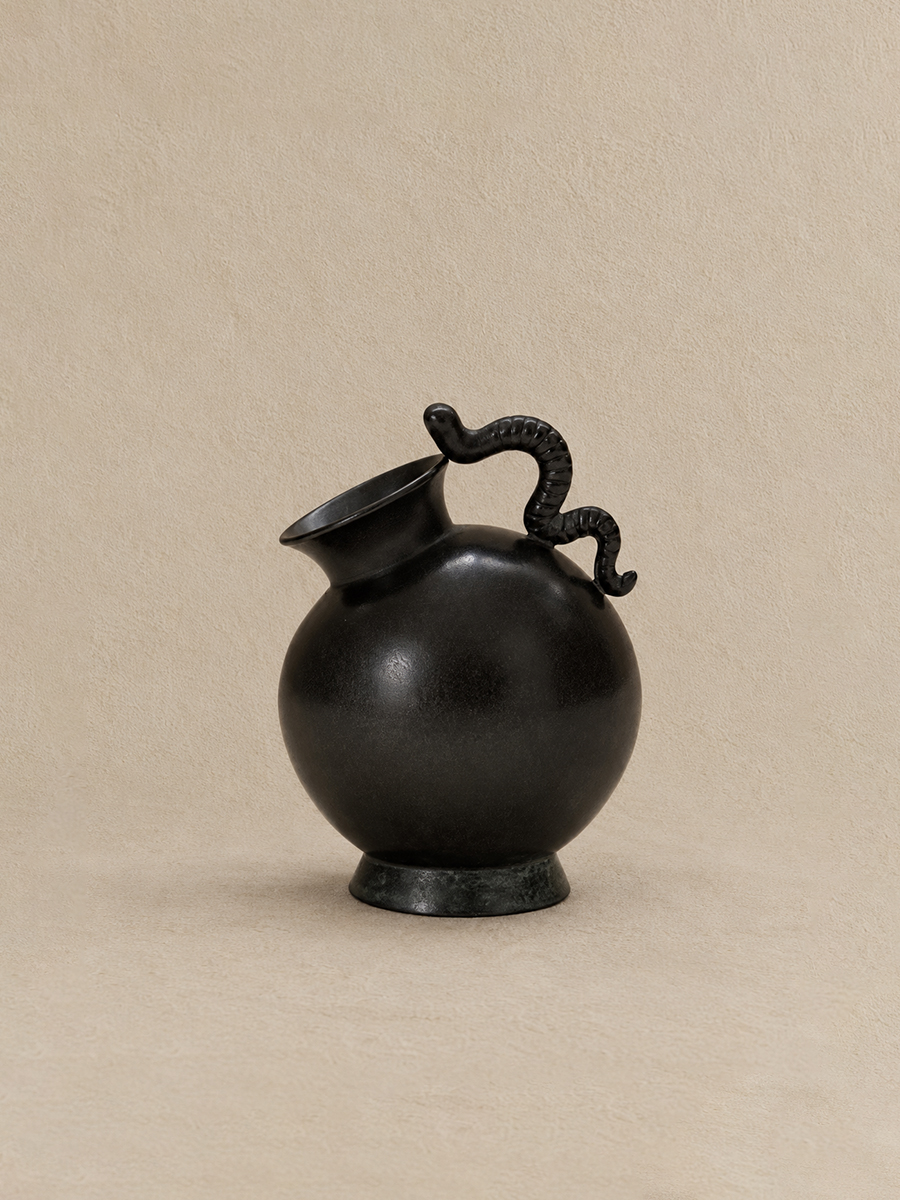
Perhaps the most distinctive expression of Andersen’s interest in material was Disko metal, the alloy he named after the Greenlandic island of his childhood. Used for vases, bowls, candlesticks, lamps and sculptural figures, it became one of the recognizable signatures of his workshop.
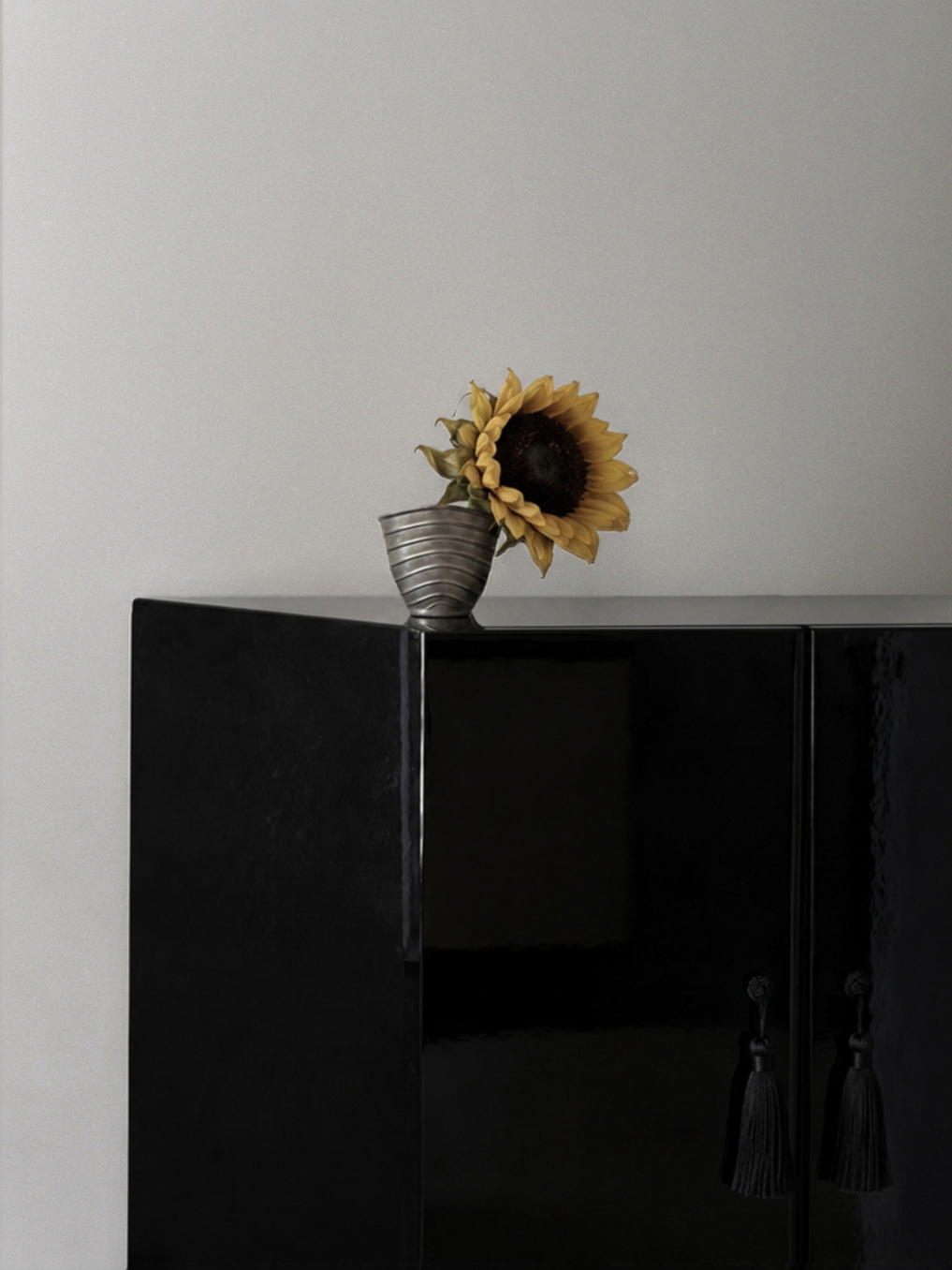
Its characteristic dark finish offered a marked contrast to the brilliance of polished silver. Rather than emphasizing reflection, Disko metal gave objects a dense, subdued appearance. The relative uniformity of its surface brought the silhouette into sharper focus, allowing even small variations in profile to assume greater importance.
Disko metal also represented a departure from the traditional hierarchy of precious and utilitarian materials. Its significance lay not in intrinsic value but in the aesthetic possibilities Andersen found within it. The alloy became a medium through which he could explore qualities more commonly associated with sculpture than with domestic metalwork.
Light Across a Surface
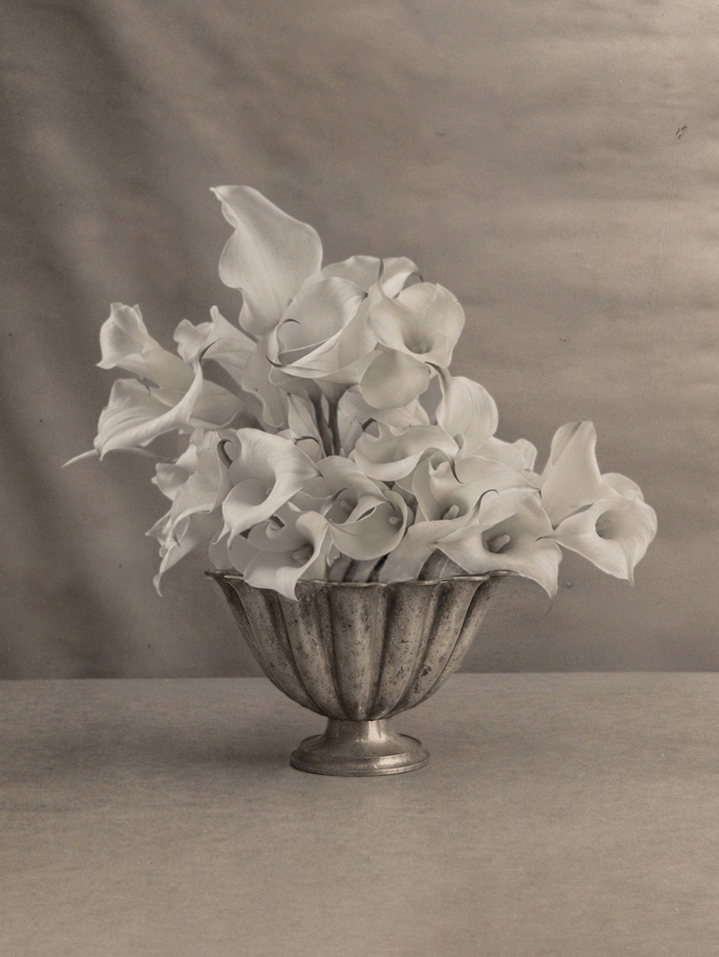
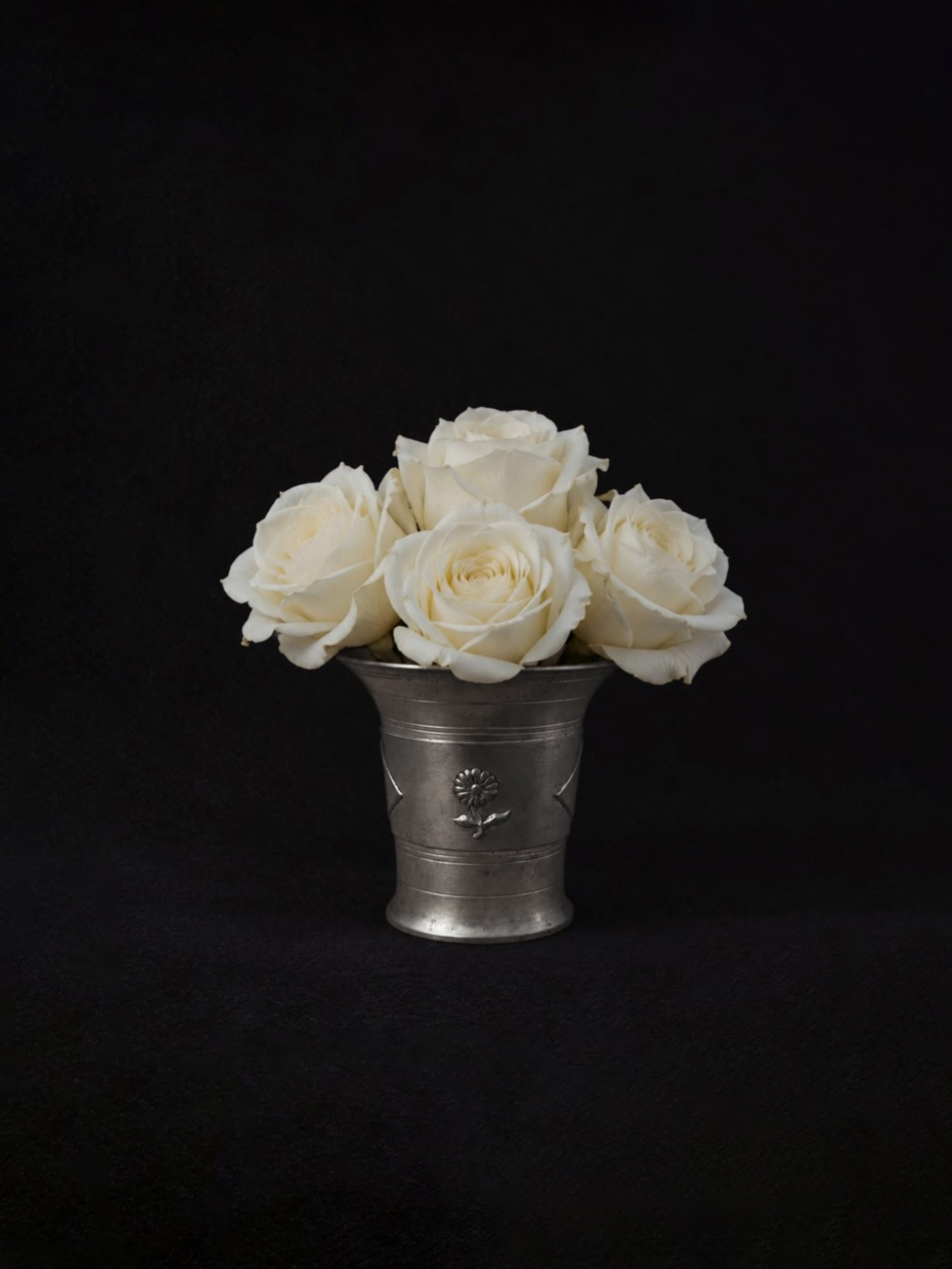
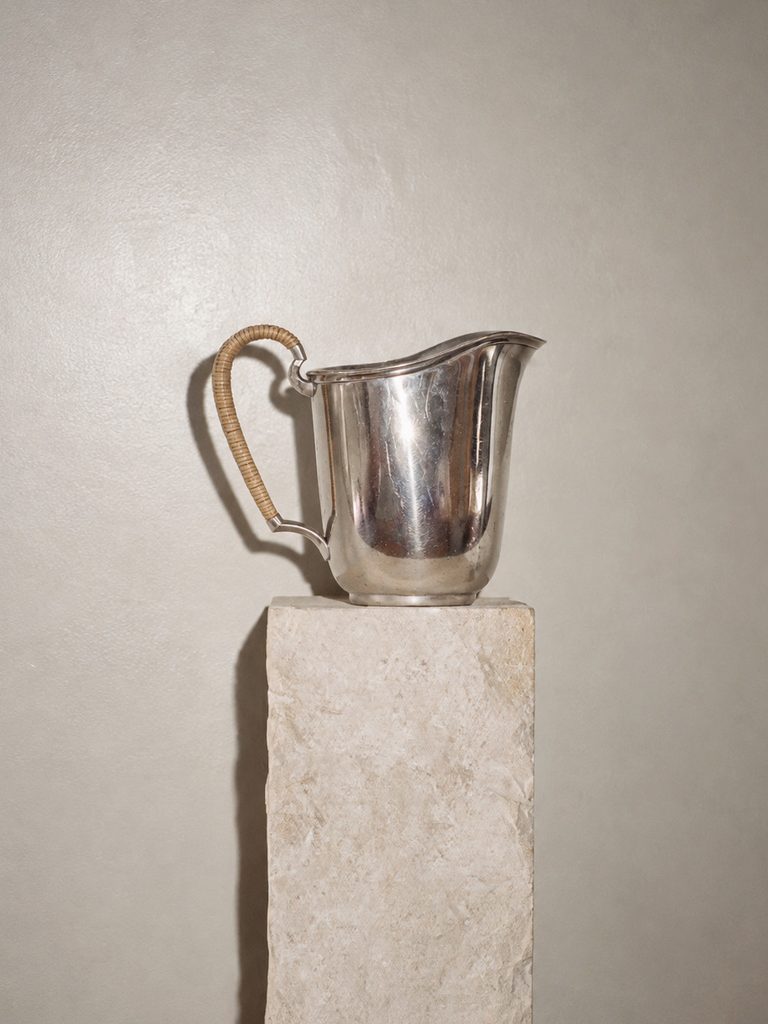
While proportion established the structure of Andersen’s objects, their surfaces determined how that structure became visible. Silver produced sharp reflections, bronze emphasized the depth of recesses, and pewter offered a softer transition between illuminated and shaded areas. Each material gave the same formal vocabulary a different visual character.
Andersen also used texture to regulate these effects. Ribbing divided a surface into alternating passages of light and shadow, while smooth, uninterrupted curves allowed reflections to move continuously around a vessel. A narrow decorative band could mark a transition between volumes without disturbing the overall simplicity of the design.
Such details reveal the extent to which Andersen treated surface as an integral part of form rather than an additional layer of ornament. Handles, rims and bases were not merely functional components. Their profiles and finishes contributed to the way an object was perceived from different angles and under changing conditions of light.
The Memory of Material
By the 1920s and 1930s, Andersen’s work was circulating beyond Denmark, encompassing jewellery, hollowware, lighting, vessels and figures. He died in 1943, after which the company bearing his name continued under Alba Andersen.
Andersen’s work raises a broader question about the place of artistic expression in objects made for everyday life. At a time when modern design was increasingly defined by utility and industrial production, his practice suggested that function and artistic ambition need not be opposing concerns.
His contribution to Danish design lies partly in this refusal to separate the useful from the expressive. Rather than treating the domestic object as a lesser form of artistic production, Andersen approached it as a field of inquiry in its own right — one in which the conventions of craftsmanship, decoration and sculpture could be continually reconsidered.
Explore Just Andersen’s designs at Artefact →
Sources & Further Reading
Dansk Biografisk Leksikon — Lex. Just Andersen. Biographical account of Andersen’s education, career, metalwork, and company.
Weilbachs Kunstnerleksikon — Lex. Just Andersen. Biographical and art-historical reference on Andersen as sculptor and silversmith, including his relationship to modern Danish Neoclassicism and functionalism.
Lex — Danmarks Nationalleksikon. Just Andersen. Overview of Andersen’s work in pewter, bronze, and Disko metal and his position within Danish classicizing functionalism.
The British Museum. Just Andersen. Collection and biographical information documenting Andersen’s work as a Danish metalworker, designer, sculptor, and medallist.
Just Andersen Selskabet. Just Andersen 1884–1943. Biographical material and documentation relating to Andersen, Alba Andersen, the workshop, and its production.
Lex — Danmarks Nationalleksikon. Danmark — kunsthåndværk og design. Historical overview of Danish design and the transition from 1920s classicism toward functionalism.
Thage, Jacob. Danske Smykker / Danish Jewelry. Reference work on Danish jewellery and metalwork, including Just Andersen.
Just Andersen Selskabet. Collection and archival material relating to Just Andersen and the production of his workshop.
The British Museum. Collections relating to Just Andersen and Danish metalwork of the early 20th century.