
STIG LINDBERG: THE ART OF EVERYDAY WONDER
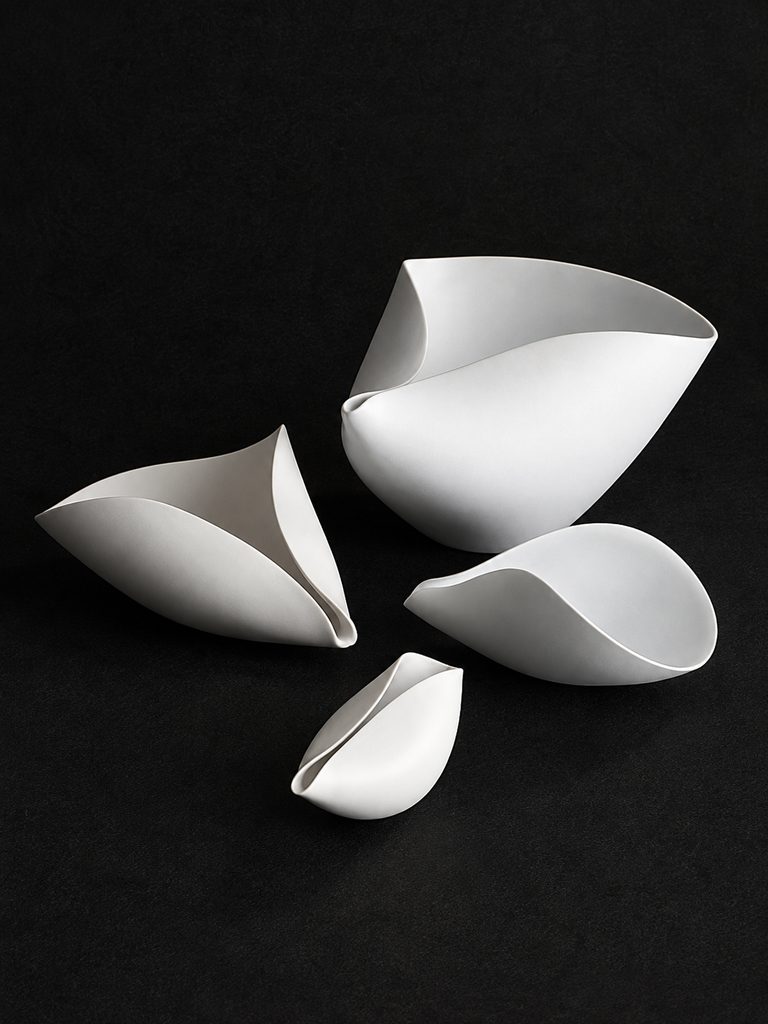
Leaves spread across a porcelain cup. Strange figures emerge from a printed textile. A simple kitchen utensil takes on the form of a small sculpture. For Swedish designer Stig Lindberg (1916–1982), the objects of everyday life offered possibilities that extended far beyond their practical purpose.
A Designer at the Factory
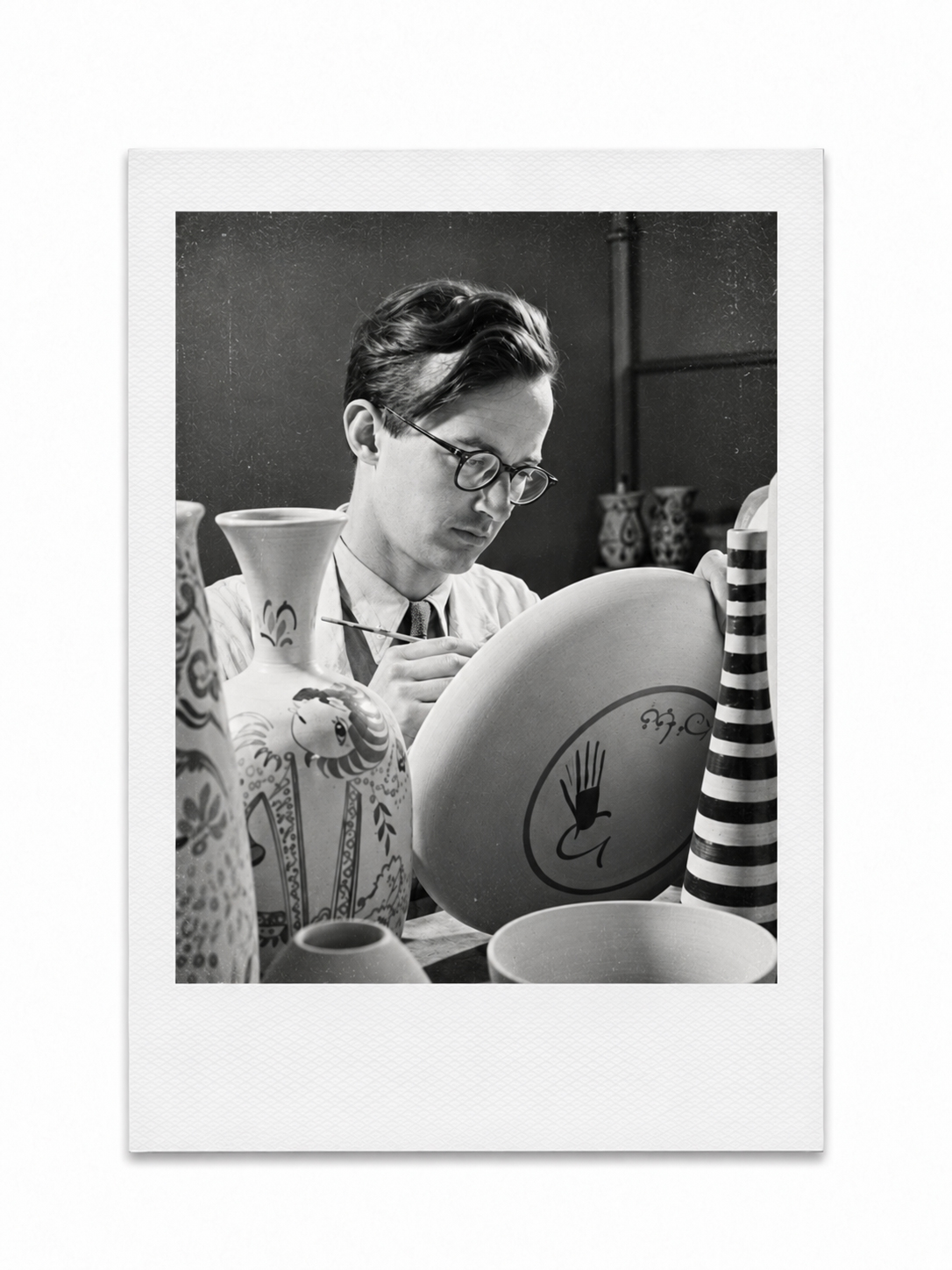
Born in Umeå in 1916, Lindberg entered Stockholm’s Tekniska skolan, now Konstfack, in 1935. Two years later, at the age of 21, he arrived at the Gustavsberg porcelain factory looking for work.
The timing was hardly ideal. There were no positions available, but Lindberg reportedly suggested that if the factory employed him, he could create work. His confidence caught the attention of Wilhelm Kåge, Gustavsberg’s artistic director, and Lindberg joined the factory in 1937.
The appointment marked the beginning of a relationship that would define much of his professional life. In 1949, Lindberg succeeded Kåge as artistic director, assuming responsibility for the artistic development of one of Sweden’s most important porcelain manufacturers.
Gustavsberg offered an unusually expansive setting for a young designer. Its workshops brought together traditional ceramic craftsmanship, technical expertise, and the demands of industrial manufacture. For Lindberg, the factory became both a place of experimentation and a means of bringing new forms into everyday use.
Between the Studio and the Table
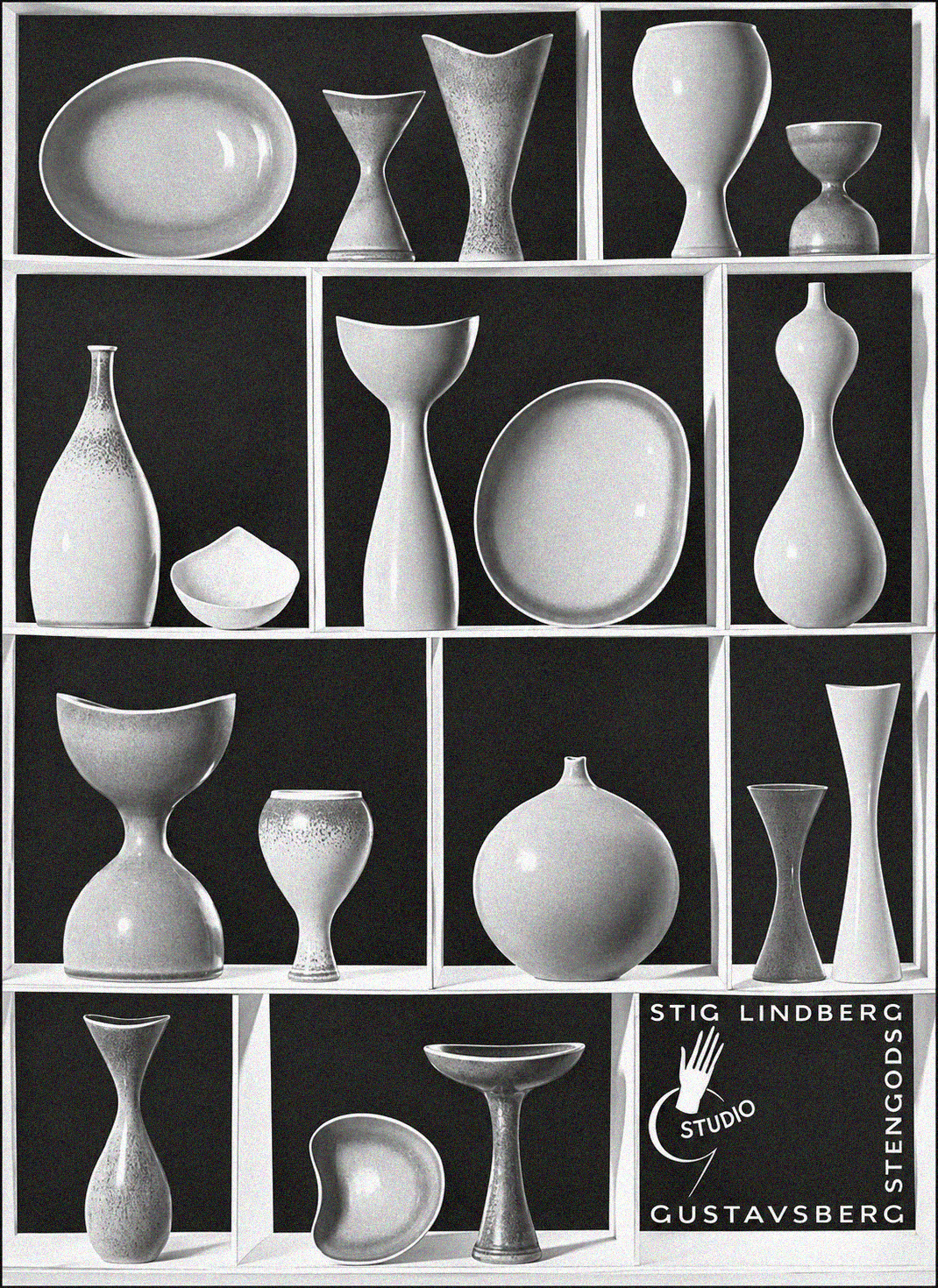
Lindberg’s early ceramics reveal a designer whose interests extended well beyond conventional tableware. During the 1940s, he produced surrealist-inflected figures in chamotte alongside vividly decorated faience, exploring the expressive possibilities of clay through exaggerated proportions, unusual silhouettes, and richly worked surfaces.
These experiments developed alongside his designs for serial production. The sculptural works allowed for a freedom of form and expression that differed considerably from the practical requirements of tableware, yet both occupied an important place in his developing practice.
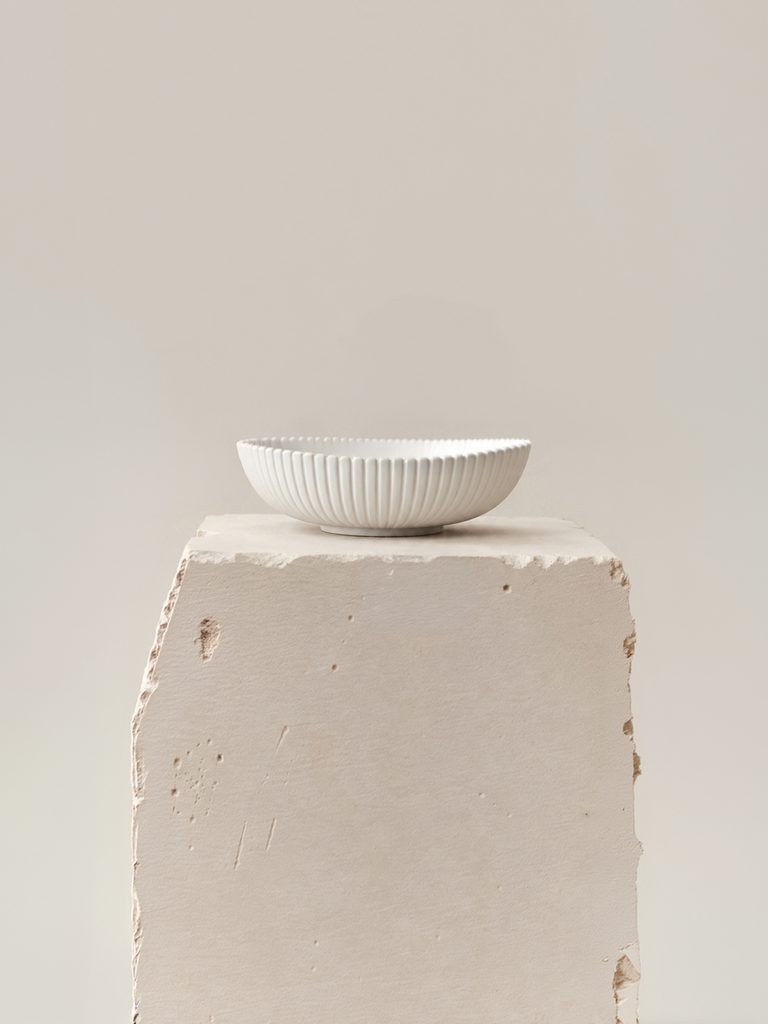
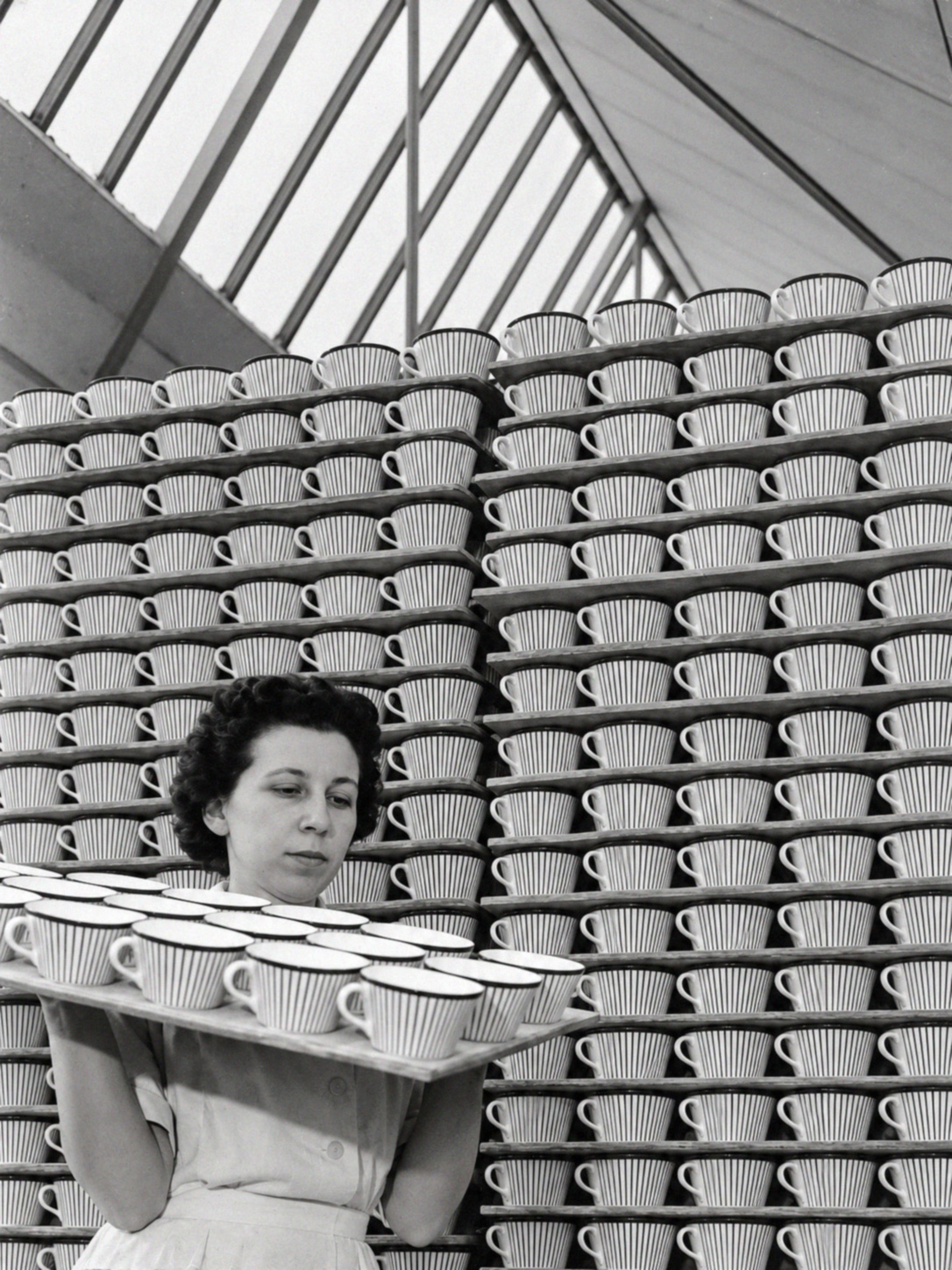
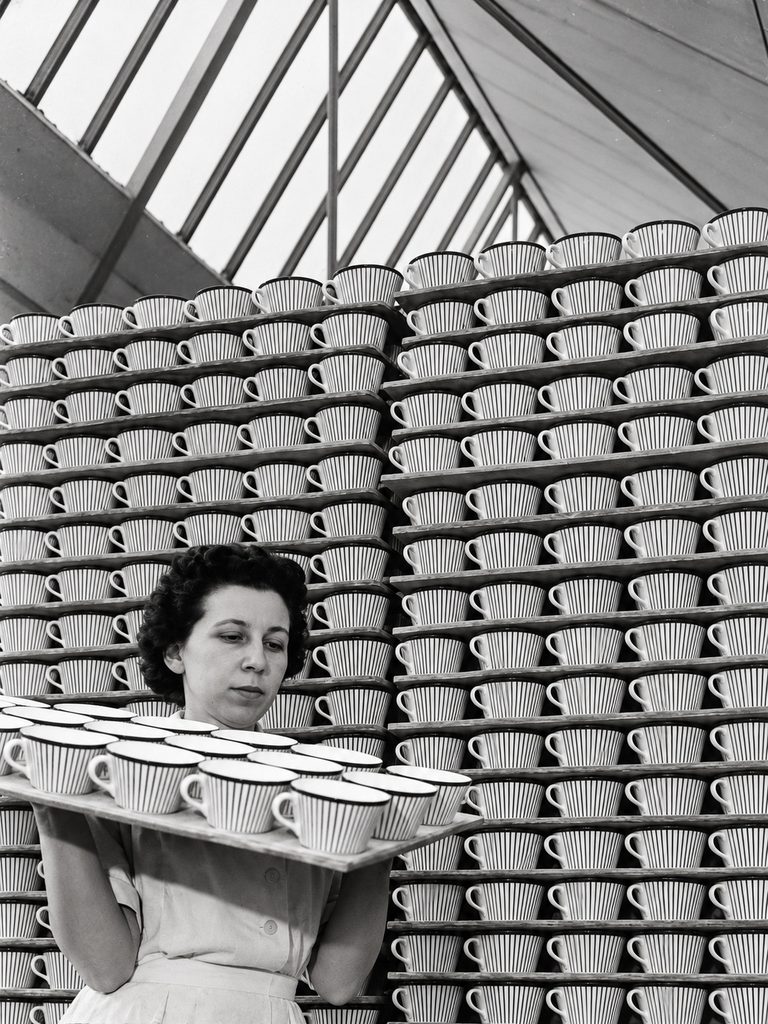
Among his most celebrated tableware designs was Spisa Ribb, presented at the H55 exhibition in Helsingborg in 1955. Its decoration consists of fine vertical lines interrupted by a dark horizontal band, creating a disciplined composition that follows the contours of each piece. Adam, introduced in 1959, took a different approach, arranging blue circles across white porcelain in a pattern that was both geometric and visually animated.
In 1961, Gustavsberg introduced Berså, whose green leaves would become one of the most familiar motifs of Swedish postwar design. Although closely associated with Lindberg, the pattern was drawn by Krister Karlmark, then working as his assistant, at Lindberg’s request.
The attribution offers an important perspective on the nature of design at Gustavsberg. Lindberg’s role as artistic director encompassed more than the creation of individual objects. He also shaped the conditions in which other designers and decorators worked, influencing the factory’s output through collaboration as well as his own designs.
The Individual Within the Industrial
The collaborative character of Gustavsberg was particularly evident in its faience production. Standardised ceramic forms provided the basis for hand-painted decoration, allowing the factory’s painters to interpret and recombine motifs within established designs.
The resulting objects occupied an intermediate position between studio ceramics and conventional industrial goods. Their forms could be reproduced consistently, yet variations in brushwork, colour, and composition distinguished individual examples.
This method reflected a broader development in Swedish ceramics, as manufacturers sought to reconcile traditional decorative techniques with the economic demands of modern production. At Gustavsberg, the painters’ contributions remained visible in the finished objects, making the process of manufacture an integral part of their aesthetic character.
Lindberg’s faience is particularly revealing in this respect. A repeated form could become the starting point for numerous interpretations, each shaped by the decisions of the person decorating it. The distinction between design and execution was therefore less fixed than the finished objects might initially suggest.
Beyond Ceramics
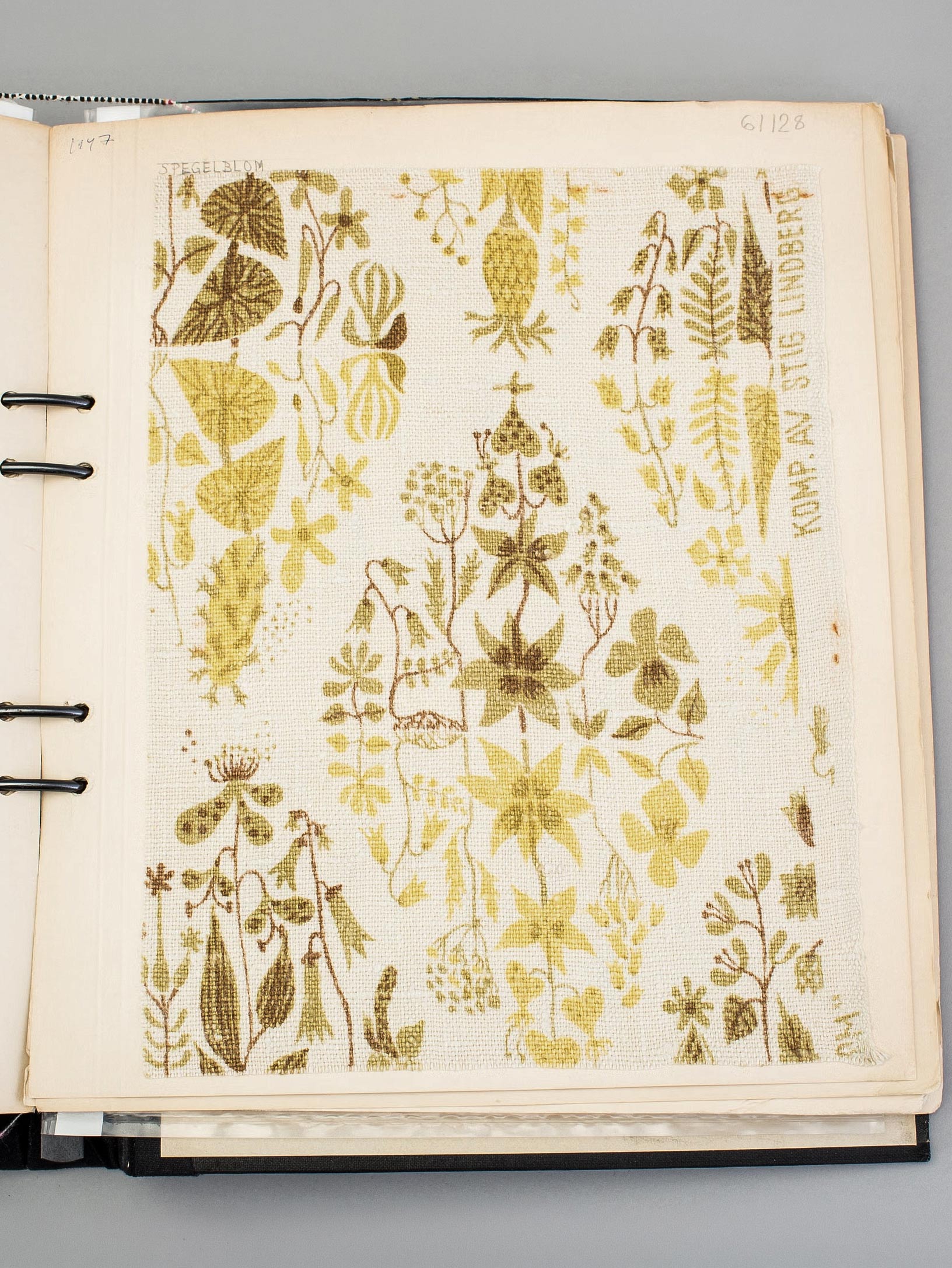
Although Gustavsberg remained central to his career, Lindberg’s practice extended into a remarkable range of materials and disciplines. During the late 1940s, he designed glass for Målerås and textiles for Nordiska Kompaniet, where patterns such as Fruktlåda and Lustgården demonstrated his particular affinity for illustration and printed design.
His textiles are populated by plants, animals, human figures, and abstract shapes, often arranged in dense compositions. Familiar subjects are simplified, distorted, or combined in unexpected ways, producing patterns that reward close examination. Unlike the restrained geometry of much contemporary textile design, Lindberg’s compositions frequently suggest entire imaginary worlds.
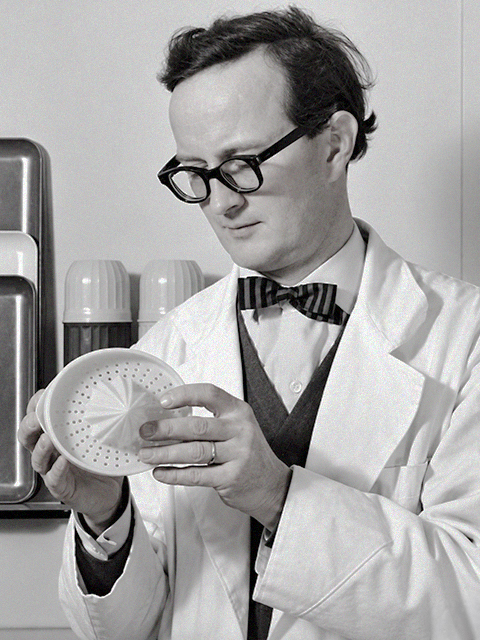
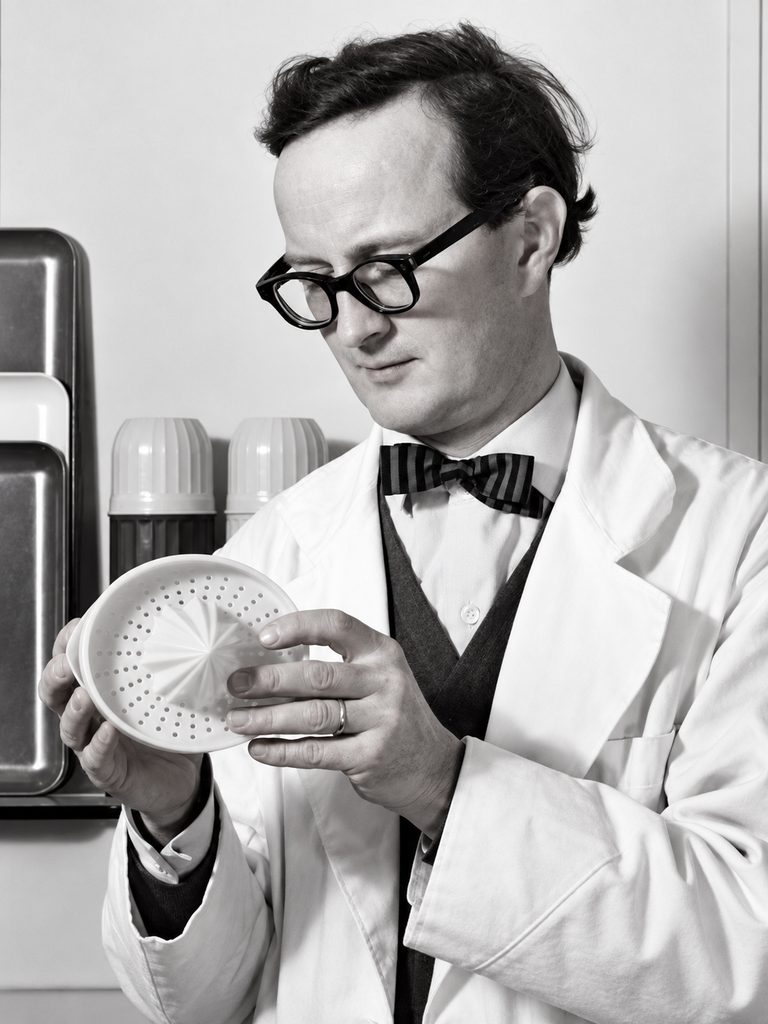
His interest in new materials was equally pronounced. The plastic Lemon Squeezer of 1951, now in the collection of The Museum of Modern Art in New York, illustrates his engagement with the emerging possibilities of postwar consumer design. Its sculptural shape gives a modest household utensil a presence beyond its immediate purpose.
Lindberg also worked as an illustrator, creating children’s books and graphic designs alongside commissions for packaging, playing cards, television sets, and other manufactured products.
This breadth was unusual even within the increasingly interdisciplinary design culture of the period. Yet his work retained a recognisable identity across different media. Whether drawing an illustration or developing a ceramic vessel, Lindberg approached composition with a graphic sensibility, treating the relationship between shape, surface, and image as a central concern.
Designing for Everyday Life
In 1957, Lindberg left his position as artistic director at Gustavsberg to become head teacher at Konstfack, where he remained until 1970. He subsequently returned to Gustavsberg’s artistic leadership from 1972 to 1980, continuing his involvement with the factory during a period of considerable change in Swedish manufacturing and design.
His career unfolded alongside the development of the Swedish welfare state, when improvements in housing, domestic technology, and consumer goods were transforming the material conditions of everyday life. Design occupied an important position within this process, understood not only as a commercial activity but also as a means of shaping the modern home.
Within this context, Lindberg represented a distinctive interpretation of functionalism. Where some of his contemporaries pursued visual restraint and formal reduction, he embraced ornament, narrative, and expressive variation. His work suggests that the principles of modern design were never as aesthetically uniform as subsequent accounts have sometimes implied.
The Life of Objects
Today, Lindberg’s work is represented in the collections of Sweden’s Nationalmuseum and The Museum of Modern Art in New York. Designs such as Spisa Ribb, Adam, and Berså have remained in circulation, acquiring a familiarity that extends well beyond their original historical setting.
Their continued popularity has also shaped the way Lindberg is remembered, often through a relatively small selection of decorative motifs. Yet the familiarity of these designs can obscure something essential about their original character. What now appears comfortably established in the Swedish home once belonged to a period of experimentation, when the appearance and possibilities of everyday objects were being actively reconsidered.
Lindberg’s achievement was not simply to make ordinary things more decorative, but to give them a capacity to engage the imagination. A pattern might reveal an unexpected figure; a familiar vessel might take on the presence of sculpture. These qualities were not confined to the moment of their creation. They continued to unfold through the ordinary acts of looking, handling, and living with the objects.
In this sense, the everyday was never merely a setting for Lindberg’s work. It was where his designs acquired their meaning, becoming part of the domestic routines, personal associations, and changing interiors of successive generations. Their place in design history is inseparable from these less visible histories of use.
Explore Stig Lindberg’s designs at Artefact →
Sources and Further Reading
Eronn, Gisela. Stig Lindberg: Tusenkonstnären. Stockholm: Norstedts, 2003.
Linder, Karin, ed. Stig Lindberg. Nationalmusei utställningskatalog 649. Stockholm: Nationalmuseum, 2006.
Palm, Magnus, ed., with Viveca Carlsson, Petter Eklund, Linda Larsson-Levin, and Thomas Lindblad. Stora boken om Stig Lindberg: Porslin, keramik, industridesign och textil. Stockholm: Egmont Publishing, 2016.
Nationalmuseum, Stockholm. “Stig Lindberg.” Collections.
Nationalmuseum / Gustavsbergs Porslinsmuseum. The Joyful World of Stig Lindberg. Exhibition, 2026–2027.
The Museum of Modern Art, New York. “Stig Lindberg.” Collection, Department of Architecture and Design.
The Museum of Modern Art, New York. “Stig Lindberg. Lemon Squeezer. 1951.” Collection, Department of Architecture and Design.