
LILLEMOR MANNERHEIM: THE MOVING FORMS
Organic, asymmetrical and often distinctly sculptural, Lillemor Mannerheim’s ceramics rarely settle into a single view. Across vessels, tableware and animal sculpture, she returned to a deceptively simple idea: that a static object could contain movement.
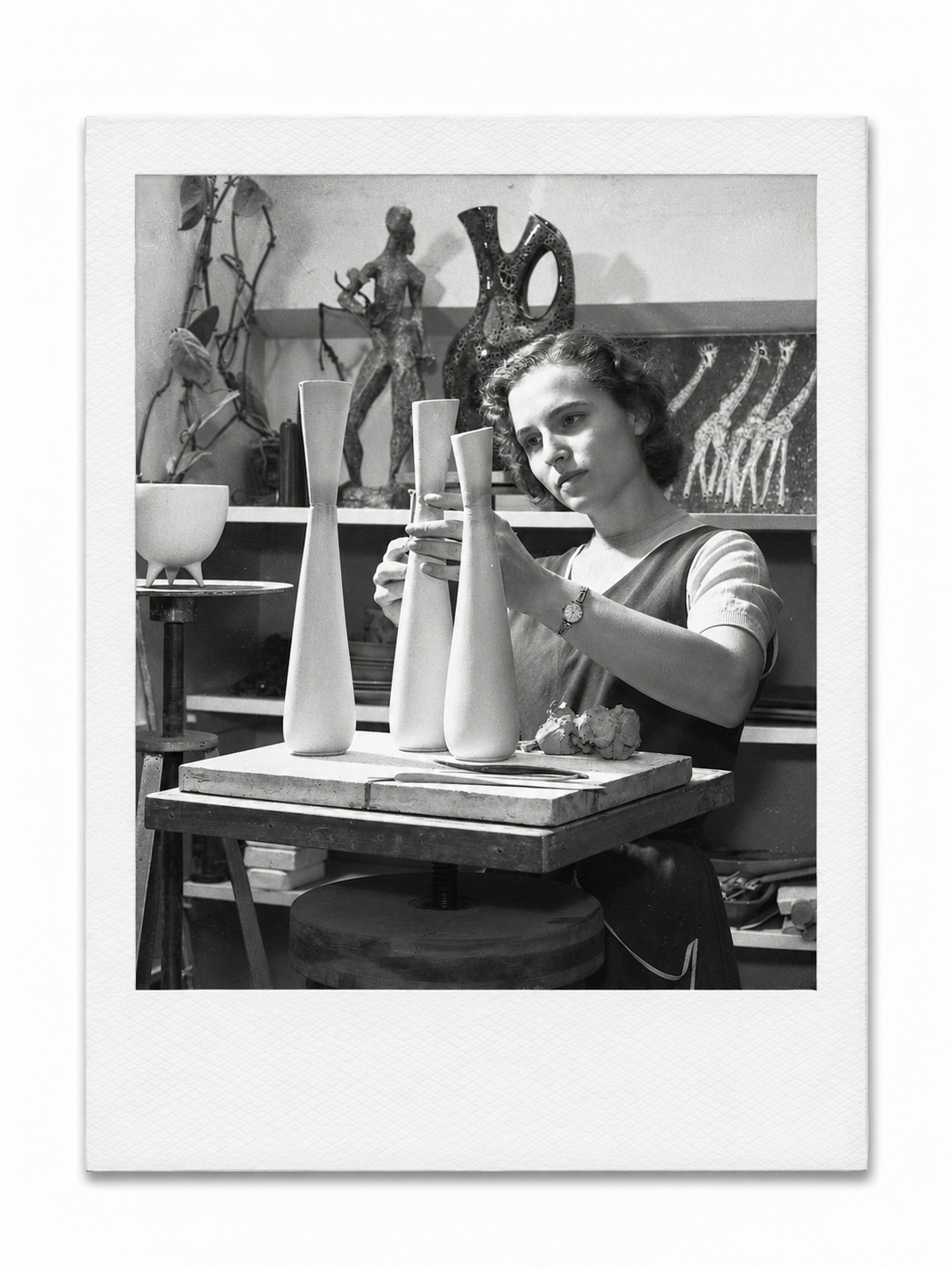
From Finland to Stockholm
Ingeborg Aina Sophie Constance Mannerheim was born in Vichtis, Finland, in 1927 and spent her early childhood at Niemenkylä, the family farm some sixty kilometres from Helsinki. Animals were part of this landscape from the beginning. She drew them as a child, particularly horses, and would return to them throughout her life. The name Lillemor, given to her by her younger brother, was later adopted professionally.
In 1945, Mannerheim moved to Stockholm to study ceramics at Konstfack. During the summers of 1946 and 1947 she worked in the art department at Arabia in Helsinki, where she encountered artists including Birger Kaipiainen, who became a lifelong friend. After graduating in 1949, she joined Gefle Porslinsfabrik in Gävle, part of the Upsala-Ekeby group.
Learning to See in the Round
Mannerheim left Gefle for Paris in 1950. At the Académie de la Grande Chaumière, she studied sculpture under Ossip Zadkine, whose teaching approached the human body as something that could be transformed towards abstraction. The shift from ceramics to sculpture would prove significant.
In 1951, she continued her training at the Manufacture Nationale de Sèvres, where trial models were cast from several of her designs. When she returned to Gefle in 1952, some of the models subsequently introduced by the factory developed from work she had begun there.
What Mannerheim brought back was not simply a new vocabulary of shapes. Sculpture had introduced another way of thinking about the object itself: not as a surface or profile, but as a volume occupying space. That distinction would become central to her work.
The “Moving Forms”
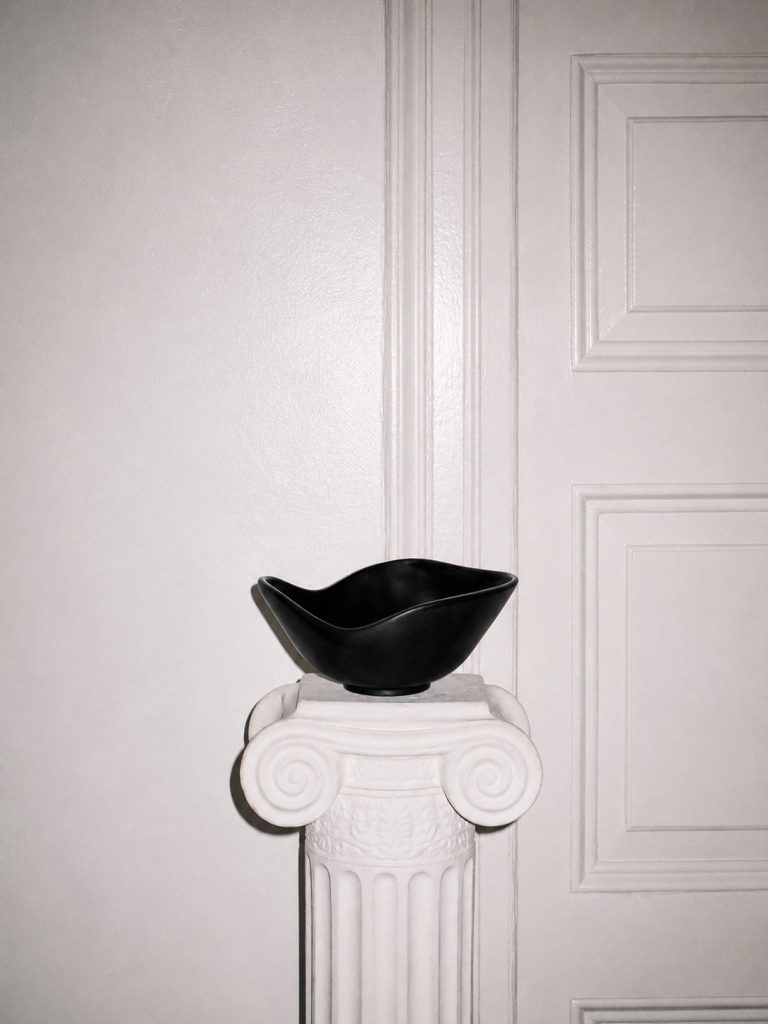
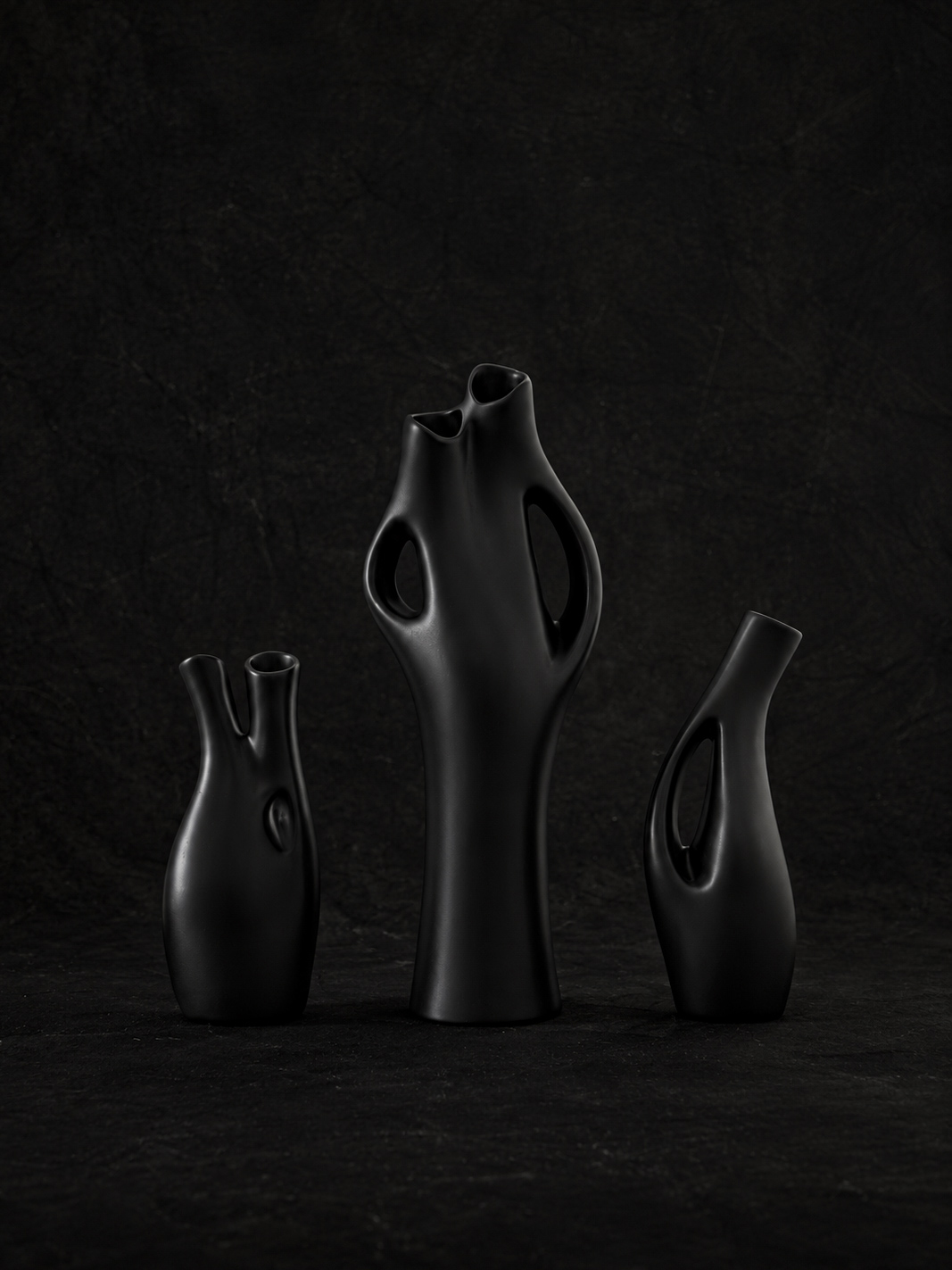
Between 1952 and 1957, Mannerheim developed some of her most distinctive work at Gefle. Alongside tableware patterns such as Solros and Västkust, she produced a series of bowls and vases characterised by irregular contours and asymmetrical proportions. She referred to these designs as rörliga former, or “moving forms.”
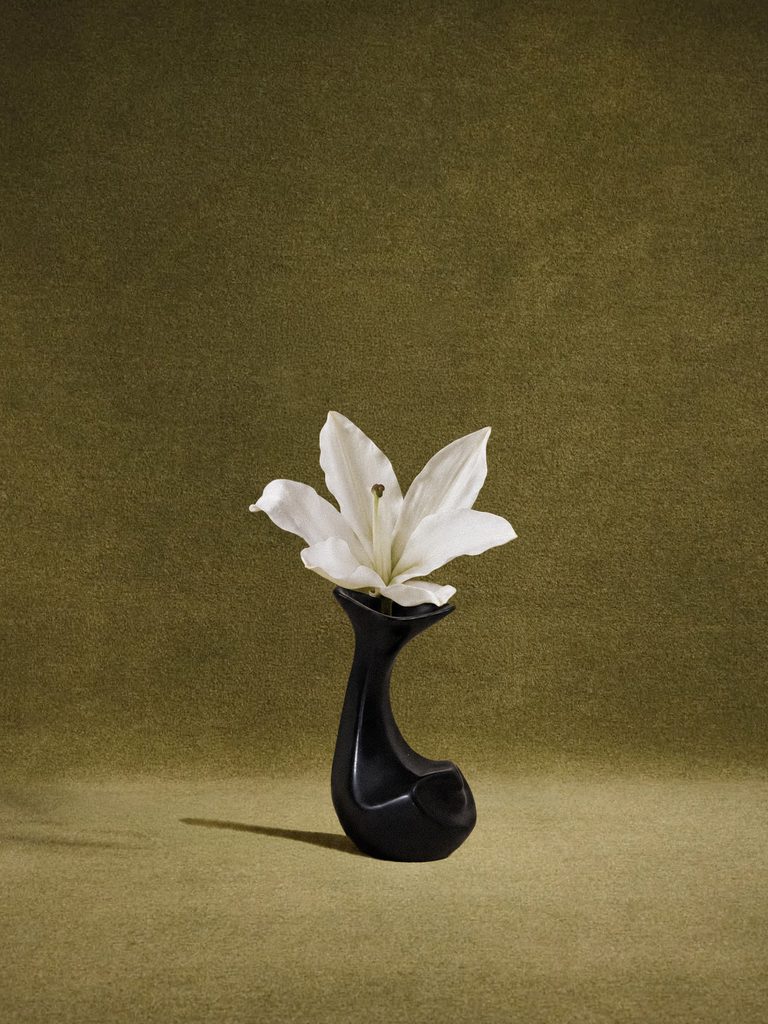
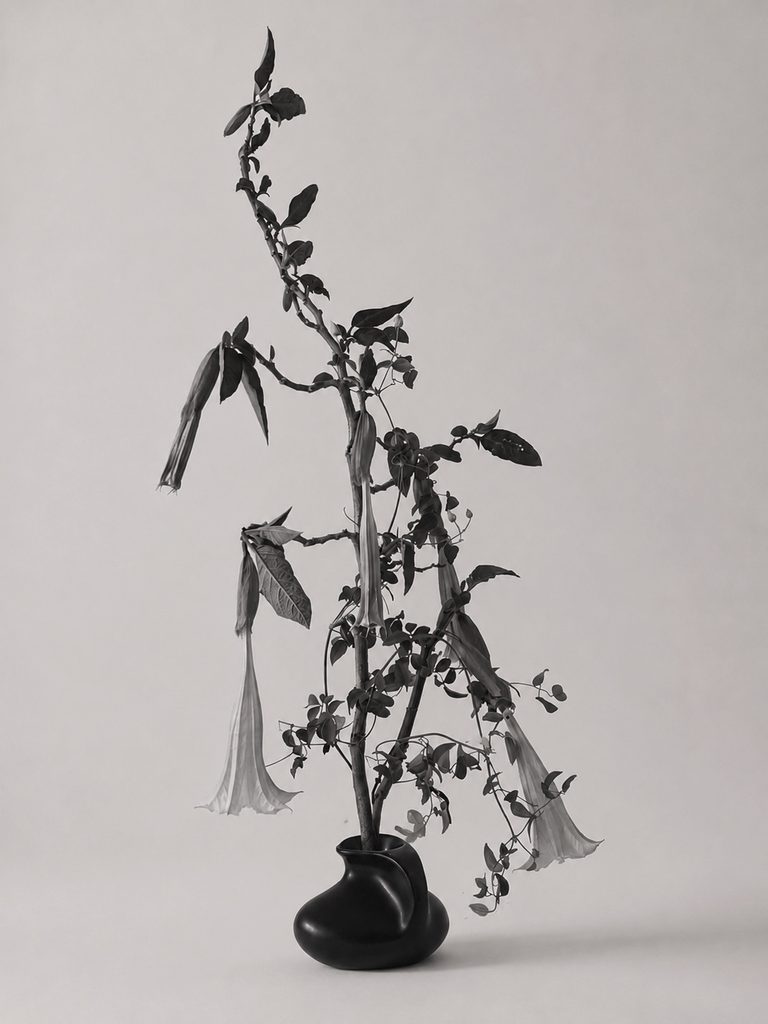
Their movement was perceptual rather than physical. Openings were displaced from the centre, rims varied in height, and the distribution of volume differed from one side to another. As a vessel was turned, its proportions appeared to shift, revealing relationships between surfaces that were not immediately apparent from a single viewpoint.
These ideas were developed most extensively in the M-serie, produced at Gefle during the mid-1950s. The collection included bowls, pitchers and vases, ranging from relatively restrained variations on familiar domestic forms to more experimental objects whose silhouettes approached abstraction.
Within the context of Swedish postwar ceramics, the series brought sculptural experimentation into an industrial setting. Although conceived for production in a factory, the objects departed from the regularity and symmetry conventionally associated with functional tableware.
Many were finished in Mangania, a dark glaze developed at Gefle by factory engineer Arvid Nordbye. Its deep, relatively uniform surface reduced the role of ornament, directing attention towards the structure of the objects themselves. Subtle changes in contour and proportion became the principal means through which each design acquired its character.
From Vessels to Animals
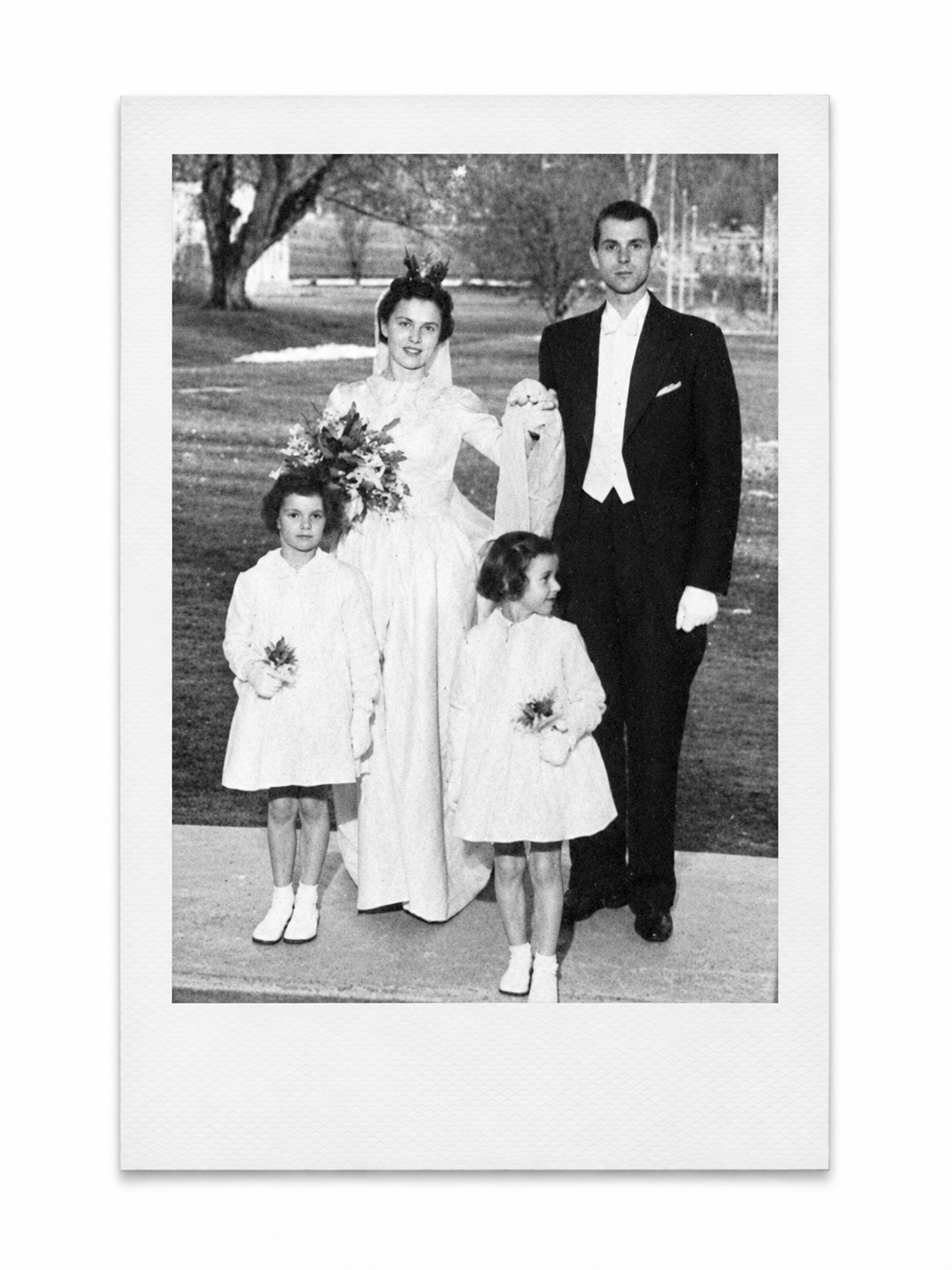
Following her marriage to Carl-Gustaf Klingspor in 1957, Mannerheim left Gefle and settled at Hellekis säteri on Kinnekulle in Västergötland. She established a studio there and continued to work independently, undertaking commissions for Hovmantorps glasbruk, Rörstrand and Nässjö Stolfabrik.
Animal sculpture became an increasingly important part of her practice. Drawing on a familiarity with animals that extended back to her childhood, Mannerheim studied their anatomy, posture and behaviour, translating these observations into simplified ceramic forms.
Her sculptures were not intended as exact representations. Instead, she selected features that conveyed something characteristic of each subject, allowing relatively small adjustments in proportion or stance to suggest differences in temperament. A horse might be recognised through the inclination of its neck, a bird through the compact arrangement of its body.
Looking at Nature
In later years, Mannerheim travelled extensively, visiting the Galápagos Islands, East Africa, Antarctica and Nepal. Her longstanding interest in animals increasingly extended beyond artistic observation to questions of wildlife conservation and environmental responsibility.
During a visit to Tibet in 1974, she met the 14th Dalai Lama. She subsequently became involved with organisations supporting Tibet, including the Tibet Committee’s activities surrounding his visit to Sweden in 1988.
In 1984, Mannerheim returned to Arabia in Helsinki to produce De hotade (The Endangered ), a series of sculptures representing threatened animal species, including pandas, penguins and koalas.
Sold in support of WWF, the collection connected her ceramic practice with her interest in conservation. It also marked a return to the factory where she had worked as a student nearly four decades earlier.
Reconsidering the Narrative
Mannerheim’s years at Gefle coincided with a period of growing international interest in Swedish design. Women were increasingly prominent in ceramics, textiles and other applied arts, although established ideas about gender continued to influence professional opportunities and the attribution of creative work.
Mannerheim achieved recognition within the ceramics industry, but her early career also reveals something of these underlying tensions. Among her first designs for Gefle was a tableware pattern named Lillemor, which was initially credited to a male colleague despite bearing her own name. It was not until decades later that she publicly identified herself as its designer.
The discrepancy is particularly striking in the context of an otherwise successful career, offering a glimpse of the conditions under which women contributed to the development of Swedish modernism. The history of the period is found not only in the objects that survive, but also in the circumstances of their creation.
Explore Lillemor Mannerheim‘s designs at Artefact →
Sources and Further Reading
Jönsson, Love. “(Lillemor) Ingeborg Aina Sophie Constance Mannerheim.” Svenskt kvinnobiografiskt lexikon (SKBL), 2021.
Principal biographical source for Mannerheim’s childhood, studies at Konstfack, periods at Arabia, employment at Gefle Porslinsfabrik, studies under Ossip Zadkine, work at Sèvres, rörliga former, Solros and Västkust, Hellekis, later commissions and travels, her meeting with the Dalai Lama, De hotade and museum representation.
Langenskiöld, Susanne G. & Jönsson, Love (eds.). Handen och känslan: Lillemor Mannerheims liv och konstnärskap. Stockholm: Bokförlaget Max Ström, 2019.
Principal published monograph on Mannerheim’s life and work.
KWUM – Karin Widnäs Museum. Lillemor Mannerheim – Rörliga Former. Exhibition material.
Biographical and exhibition material relating to Mannerheim’s ceramic practice; documents De hotade as an Arabia series from 1984 and identifies subjects including pandas, penguins and koalas.
Röhsska Museum, Gothenburg. Museum collection records.
Works by Lillemor Mannerheim in the museum collection.
Länsmuseet Gävleborg, Gävle. Museum collection records.
Works by Lillemor Mannerheim in the museum collection.
Gefle / Upsala-Ekeby reference literature.
Documentation relating to Gefle production, the M-Serie and Mangania, the black glaze developed by factory engineer Arvid Nordbye.