
HARALD NOTINI: BETWEEN OBJECT AND ATMOSPHERE
For Harald Notini, the design of a lamp extended beyond the object itself to the light it cast and the space it inhabited. Working across lighting, glass, and interior design, he developed a practice that traced the changing aesthetics of Swedish modernism, from the decorative refinement of Swedish Grace to the restrained forms of the postwar interior.
Rooted in Craft
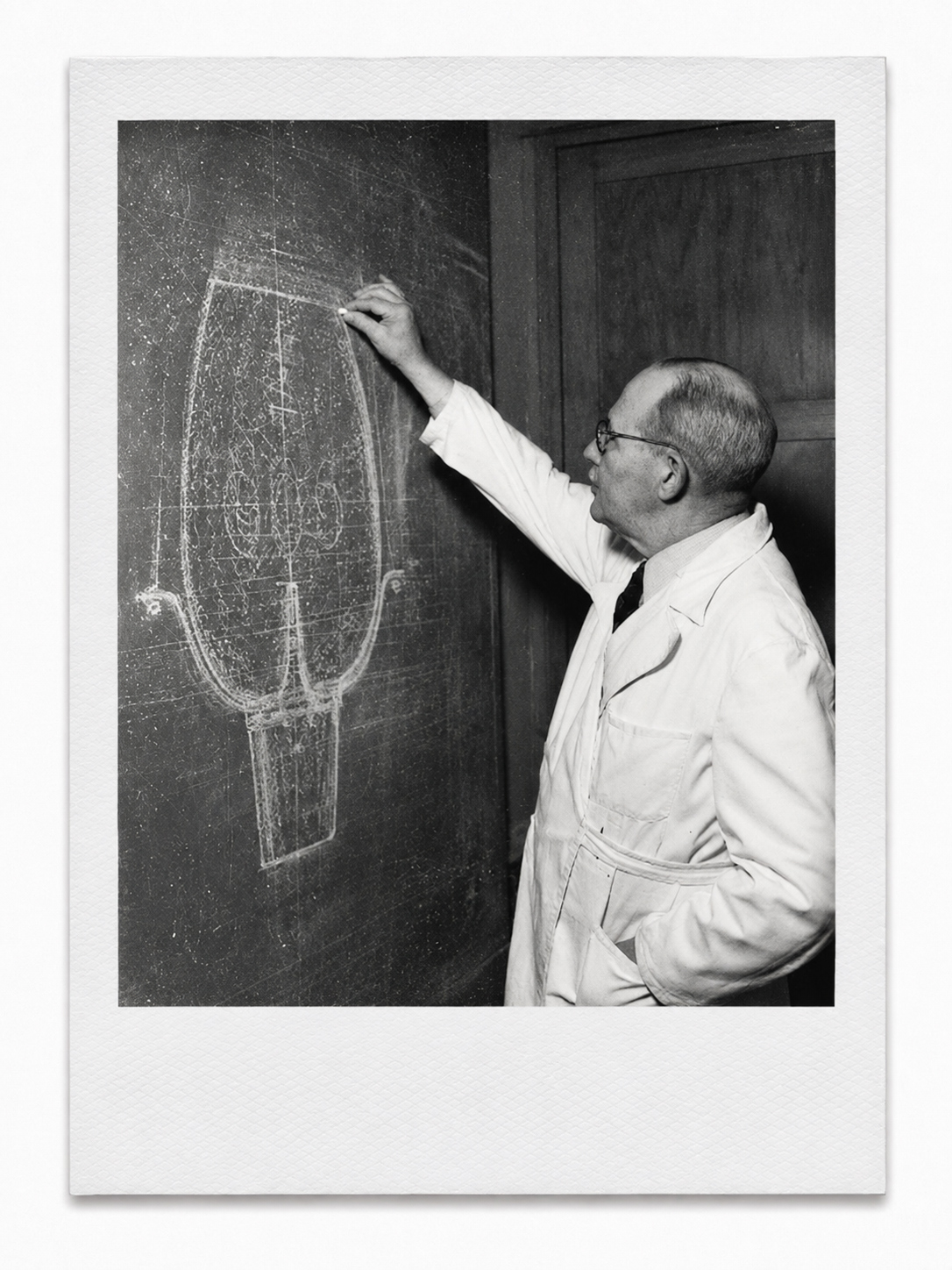
Harald Notini (1879–1959) was born into a family closely associated with the decorative arts. His father, Axel Notini, was a sculptor and ornamental craftsman, and the younger Notini grew up within a tradition in which artistic practice was closely connected to the skilled production of objects.
He studied at Högre konstindustriella skolan in Stockholm before continuing his education in France and Germany. His training encompassed sculpture and the applied arts, disciplines that would inform his approach to lighting, glass, and interior design. This foundation in craftsmanship gave him an understanding of how materials could be shaped, assembled, and adapted to different forms of production.
Böhlmark’s and Pukeberg
In 1916, Notini joined Arvid Böhlmarks Lampfabrik as artistic director, taking responsibility for the design of lighting fixtures at its Stockholm factory and glass production at Pukeberg. His appointment gave him considerable influence over the company’s artistic direction, allowing him to develop new models and expand its established repertoire.
Founded in 1872, Böhlmarks had evolved from a manufacturer of oil and kerosene lamps into one of Sweden’s leading producers of electric lighting. Its acquisition of Pukebergs Glasbruk in 1894 brought glassmaking into the company’s operations, providing Notini with access to both metalworking and glass production.
At Böhlmarks, Notini designed table lamps, ceiling fixtures, and other forms of lighting for domestic and public interiors. His work at Pukeberg encompassed vases, drinking vessels, and decorative glass, extending his practice beyond lighting into the wider field of the applied arts.
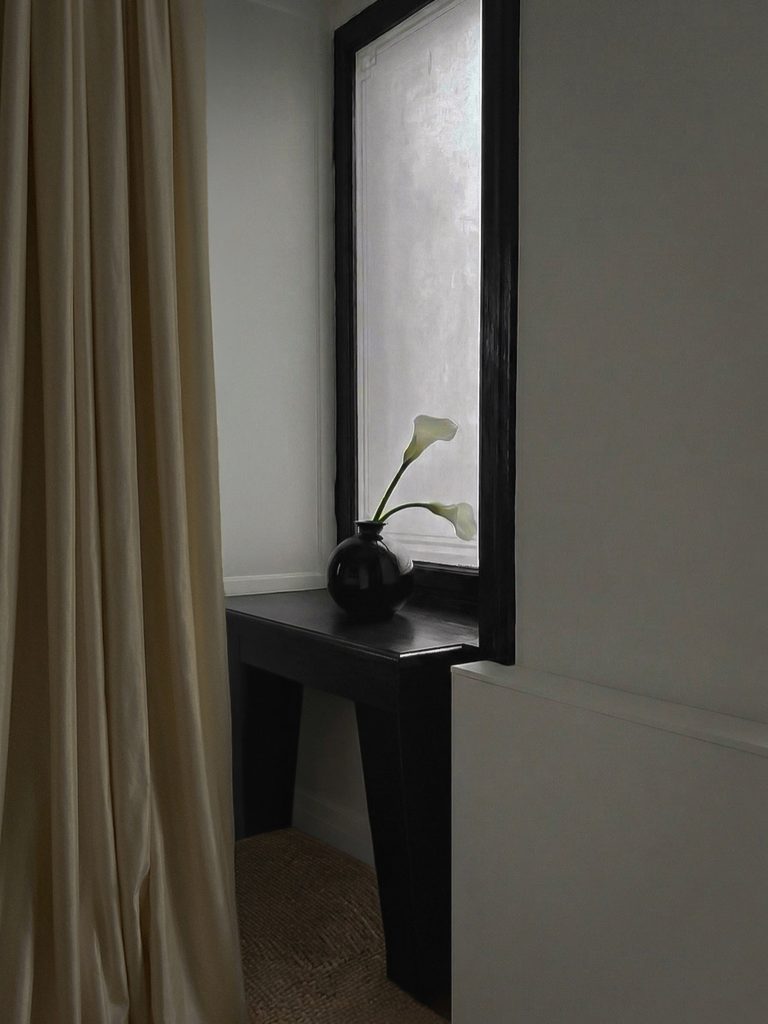
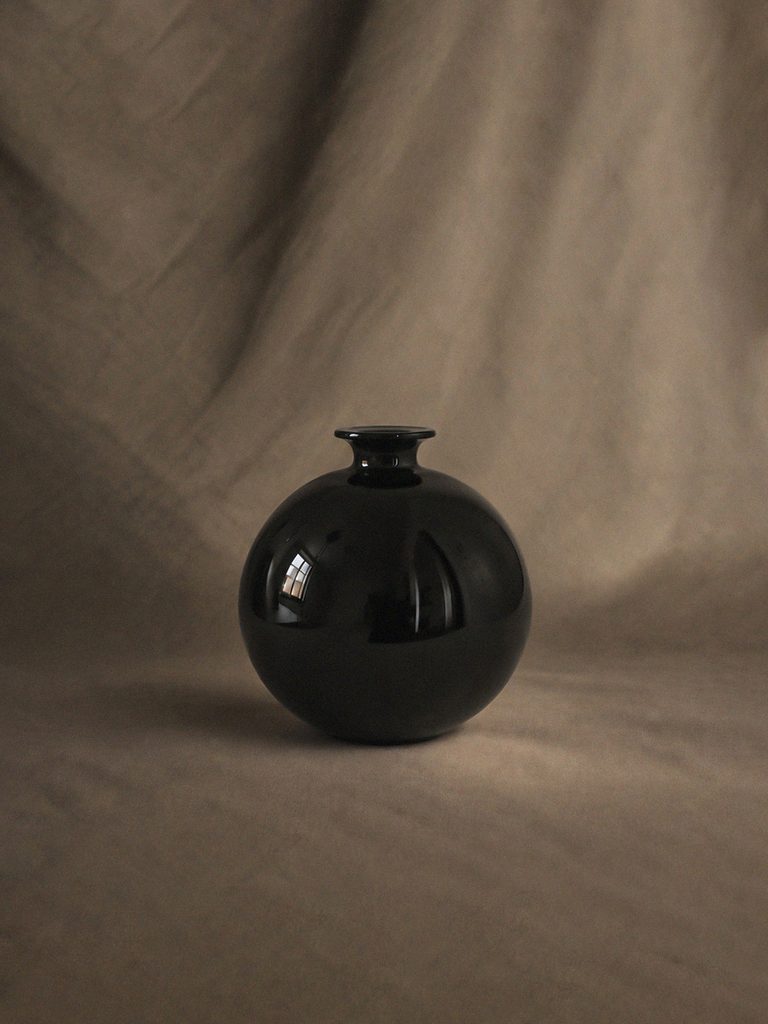
Glass offered possibilities distinct from those of metal. Depending on its composition, thickness, and finish, it could transmit or diffuse light, reflect its surroundings, or acquire an almost opaque presence. These qualities made it a particularly versatile material, equally suited to functional lighting and decorative objects.
His association with Böhlmarks and Pukeberg continued for more than four decades, providing a sustained setting for experimentation across different materials and categories of objects.
Designing with Light
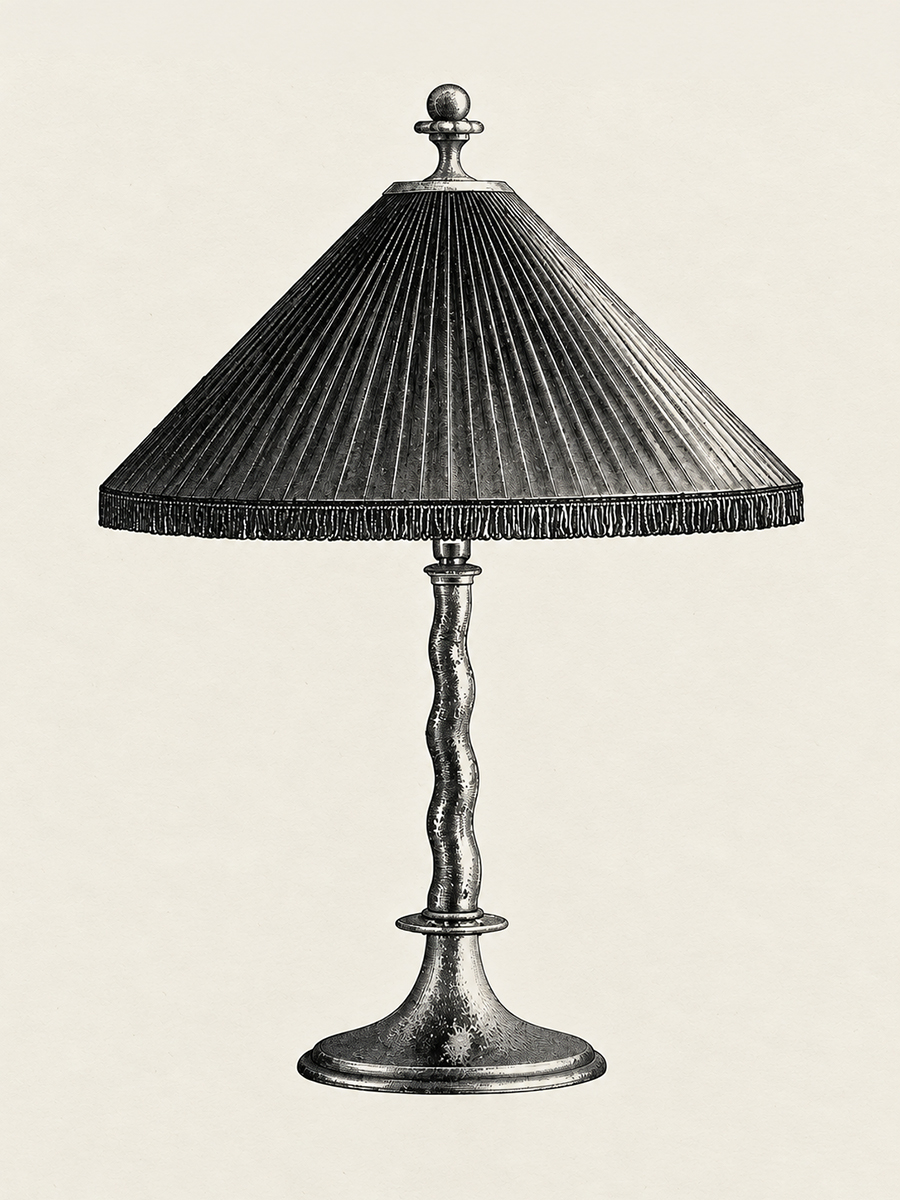
A lamp presented a particular problem: it had to function as an object while simultaneously producing an effect beyond itself. Light transformed the surrounding space, making illumination as important as the physical form of the lamp.
In Notini’s lighting, glass and metal mediated between these two roles. Frosted glass could conceal the bulb and soften its intensity, while shades and reflectors directed illumination toward surrounding surfaces. Such decisions determined not only the appearance of a fixture, but also the character of the light it produced.
His sculptural background becomes particularly legible here. His lamps can be understood as compositions of mass, void, surface, and illumination—but unlike sculpture, their boundaries extend into the room when switched on. Their visual character depended not only on their physical construction, but also on the conditions in which they were experienced.
Between Ornament and Reduction
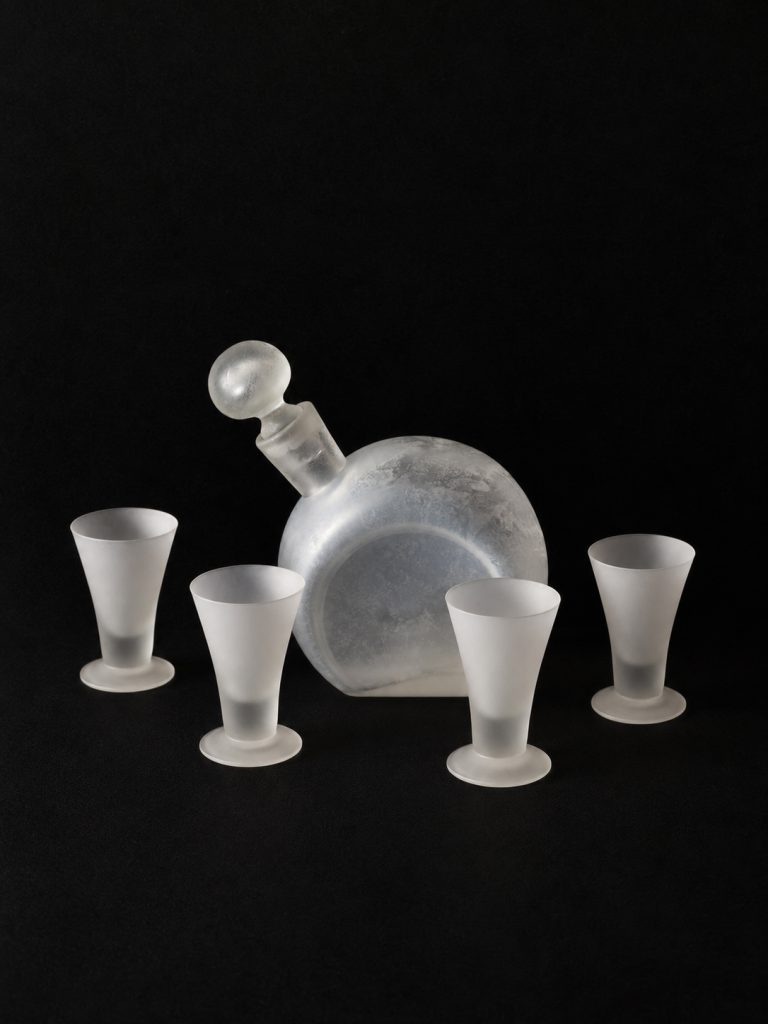
During the 1920s, Notini’s designs reflected the influence of Swedish Grace, a movement that brought classical references into dialogue with contemporary craftsmanship. Symmetry, refined detailing, and carefully balanced compositions distinguished the period, while ornament was increasingly subordinated to the overall form.
The Stockholm Exhibition of 1930 signalled a new direction. Functionalism challenged the historical references and decorative conventions of the preceding decade, advocating standardisation, efficient production, and objects designed according to their intended use. The exhibition presented a vision of modern life in which architecture, furniture, and household goods formed part of a coordinated environment.
Notini’s subsequent work became more geometric, with simplified shades, clearly defined supports, and a greater emphasis on construction. The change can be understood not simply as the removal of ornament, but as a reconsideration of where visual interest might reside. Structural elements that had previously been concealed or embellished became integral to the composition itself.
The transition was gradual rather than absolute. Elements of classical order persisted within his modernist designs, suggesting that the new aesthetic developed as much through the reinterpretation of established principles as through their rejection.
Toward a Warmer Modernism
By the 1940s and 1950s, Swedish modernism had entered a new phase. Domestic interiors increasingly favoured comfort, natural materials, and more flexible arrangements of furniture and decorative objects. Rather than presenting the home as a unified architectural composition, designers paid greater attention to the different activities and personal habits that shaped everyday life.
Lighting played an important part in this development. Where a centrally positioned ceiling fixture had traditionally provided general illumination, table and floor lamps allowed light to be distributed according to particular needs. A lamp beside an armchair could establish a place for reading, while smaller sources of illumination introduced variation across a room. The domestic interior became less dependent on a single lighting scheme and more responsive to its occupants.
Notini’s later designs belonged to this changing conception of the home. His use of brass, glass, wood, and leather connected lighting to the materials and finishes of contemporary furniture. Lamps could function as individual furnishings, contributing to the arrangement of a room even when unlit, while providing a more localised source of illumination when in use.
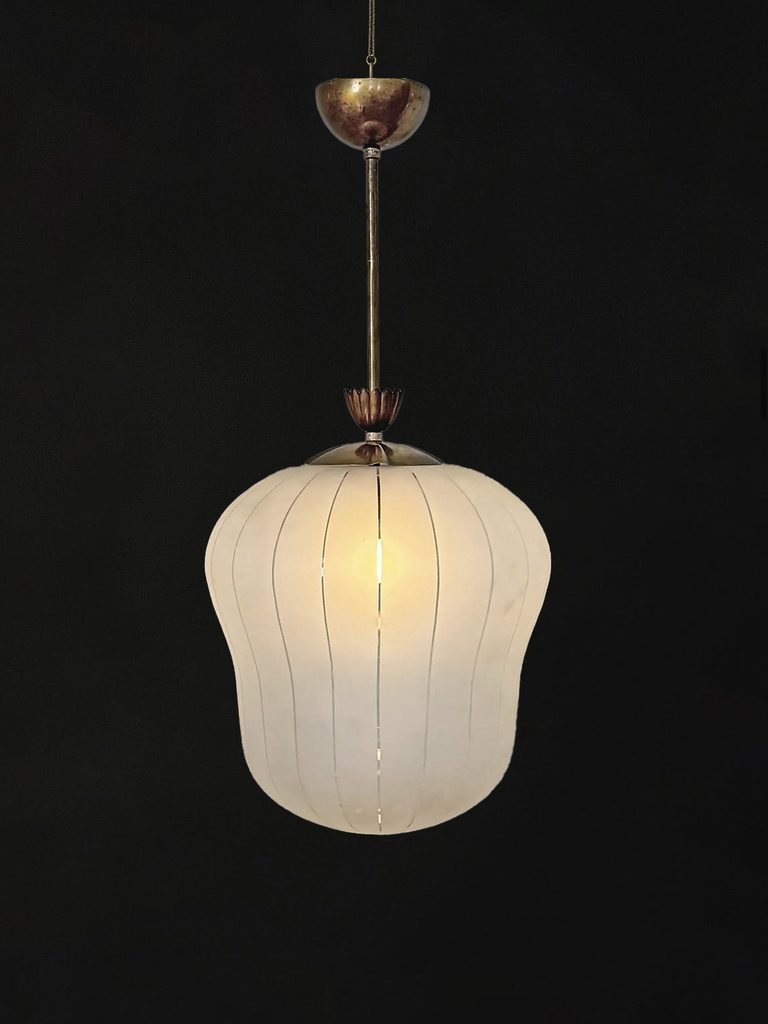
A ceiling lamp attributed to Notini and dated to around 1940 offers an example of the period’s approach to domestic lighting. Its arrangement of shade and supporting elements gives the fixture a measured, architectural quality. The proportions allow it to occupy a defined place within an interior without relying on elaborate decorative detailing. Its presence is established through the relationship between its components rather than through ornament alone.
A Place in Swedish Design
Harald Notini played a significant role in the development of Swedish lighting design during the first half of the twentieth century. Through his long association with Böhlmarks, he helped shape the design of modern lighting at a time when electric illumination was transforming domestic and public interiors.
Unlike designers whose reputations rest on a handful of celebrated objects, Notini produced an extensive and varied body of work. His designs entered homes, offices, and public buildings, contributing to the visual character of environments in which individual authorship was not necessarily apparent.
This relative anonymity is perhaps part of what makes his career significant. Notini’s influence was expressed less through a single recognisable design than through the gradual transformation of an entire category of objects. His work offers a perspective on Swedish modernism in which design history is shaped not only by its most celebrated figures, but also by those whose contributions became part of the everyday landscape.
Explore Harald Notini’s designs at Artefact →
Sources and Further Reading
Nationalmuseum, Stockholm. Harald Notini (1879–1959). Collection database.
Nationalmuseum, Stockholm. Floor Lamp, designed by Harald Notini for AB Arvid Böhlmarks Lampfabrik, 1935. Collection no. NMK 10/2016.
Bukowskis. Harald Notini (1879–1959). Bukipedia, biographical and design history entry.
AB Arvid Böhlmarks Lampfabrik. Product Catalogues, 1920s–1940s. Historical catalogues documenting lighting designed and produced during Harald Notini’s tenure.
Boet: Månadsskrift för hemkultur, hantverk och konstindustri. Gothenburg, 1935, pp. 212–213.
Brunnström, Lasse. Swedish Design: A History. London: Bloomsbury Academic, 2018.
Creagh, Lucy. Swedish Modern: A Movement Towards Sanity in Design. Stockholm: ArkDes, 2013.
Fiell, Charlotte, and Peter Fiell. Scandinavian Design. Cologne: Taschen.
Nationalmuseum. Swedish Grace: Art and Design in 1920s Sweden. Stockholm: Nationalmuseum.
Rudberg, Eva. The Stockholm Exhibition 1930: Modernism’s Breakthrough in Swedish Architecture. Stockholm: Stockholmia Förlag.