
STIG LINDBERG: THE ART OF EVERYDAY WONDER
Stig Lindberg transformed the language of Swedish modernism by bringing imagination to the objects of everyday life. Moving between ceramics, textiles, glass, plastics, and illustration, he showed that mass production could accommodate wit, individuality, and artistic expression—and that function need not come at the expense of wonder.
A Designer at the Factory
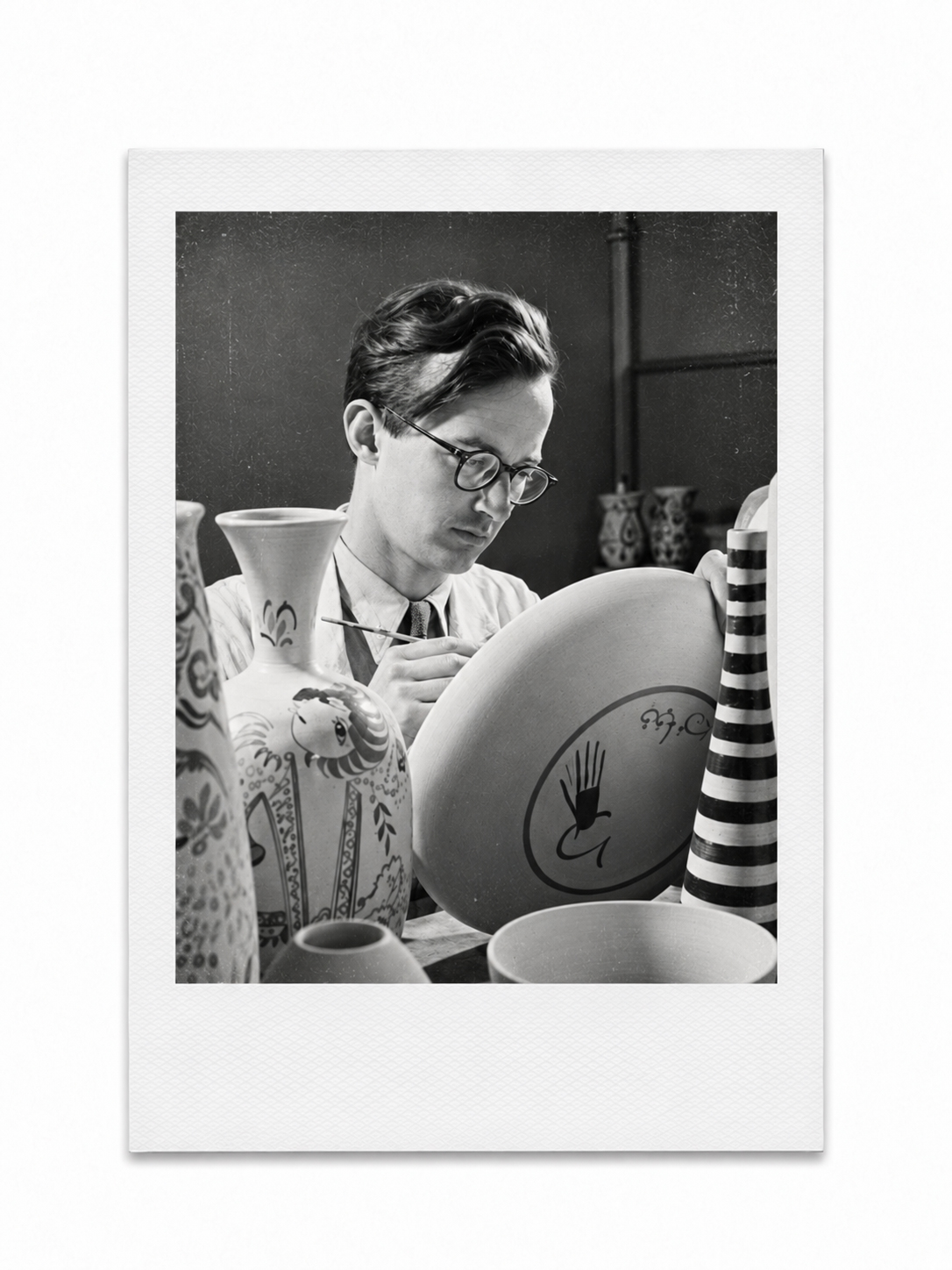
Born in Umeå in 1916, Lindberg entered Stockholm’s Tekniska skolan, now Konstfack, in 1935. Two years later, at the age of 21, he arrived at the Gustavsberg porcelain factory looking for work.
The timing was hardly ideal. There were no positions available, but Lindberg reportedly suggested that if the factory employed him, he could create work. His confidence caught the attention of Wilhelm Kåge, Gustavsberg’s artistic director, and Lindberg joined the factory in 1937.
It became the defining relationship of his career. In 1949, Lindberg succeeded Kåge as artistic director, a position that placed artistic experimentation unusually close to industrial production.
Rather than seeing the factory as a compromise between art and commerce, Lindberg treated its materials, techniques, and systems of production as part of the creative process itself.
Between the Studio and the Table
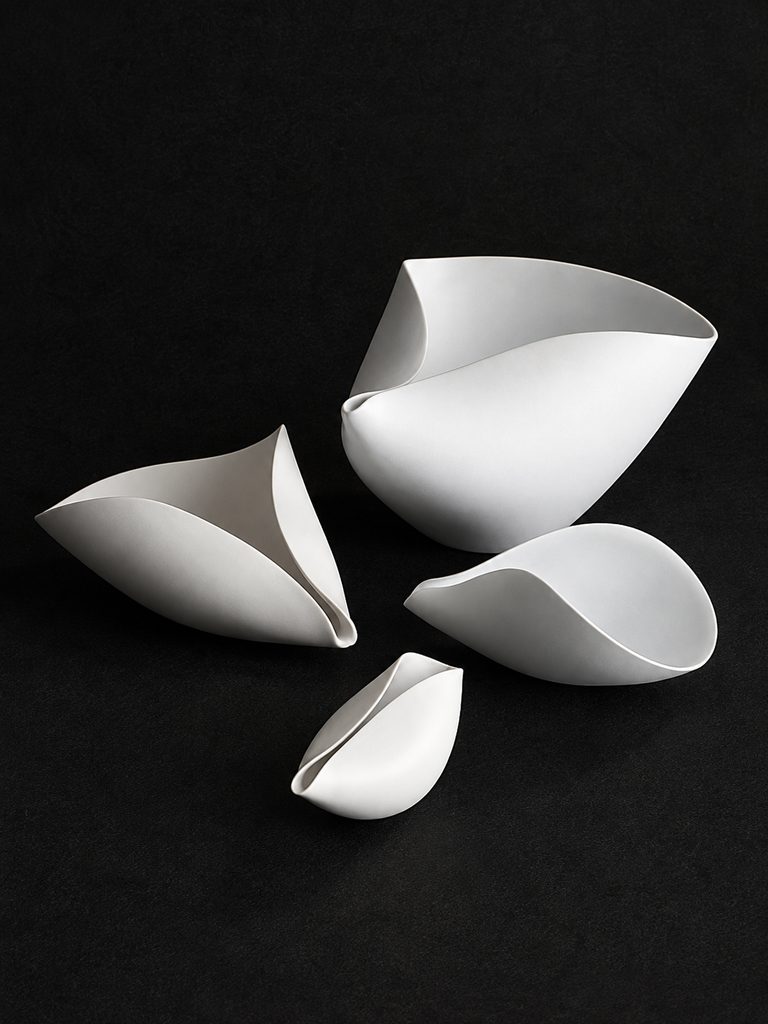
At Gustavsberg, Lindberg worked simultaneously on objects intended for everyday use and ceramics that explored the medium on more experimental terms. His early studio work could be tactile, irregular, and strange.
During the 1940s, he produced surrealist-inflected figures in chamotte alongside vividly decorated faience, establishing a visual vocabulary that resisted the idea that modern objects needed to be austere. The same interest in drawing, rhythm, and surface appeared in objects made for thousands of homes.
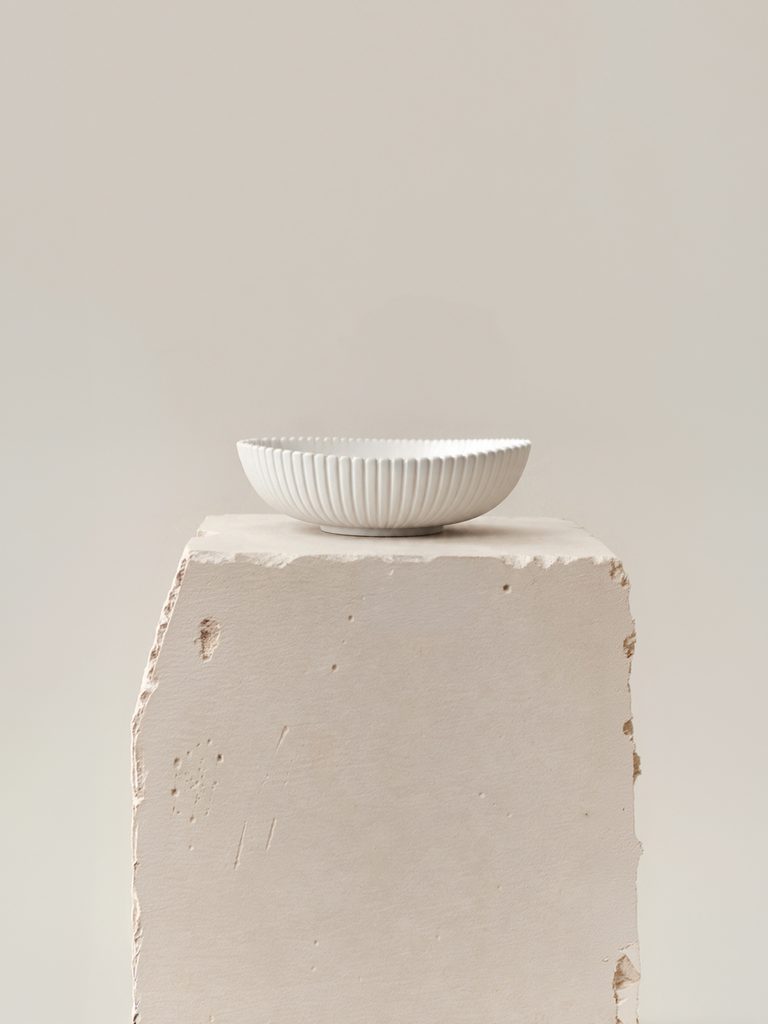
Spisa Ribb, presented at the H55 exhibition in Helsingborg in 1955, reduced decoration to a sequence of fine vertical lines crossed by a dark horizontal band. Adam, introduced in 1959, used a field of blue circles to turn simple geometry into pattern.
Then came Berså. First produced in 1961, its repeating green leaves became one of the most recognizable motifs of Swedish postwar design. Yet its authorship is more collaborative than its association with Lindberg suggests: the leaf pattern was drawn by Krister Karlmark, then working as Lindberg’s assistant, at Lindberg’s request.
The distinction matters. Gustavsberg was an environment in which designers, decorators, craftspeople, and industrial processes converged. Lindberg’s influence extended beyond the objects he personally drew to the visual culture of the studio and factory around him.

The Individual Within the Industrial
This relationship between repetition and variation was particularly visible in Lindberg’s faience. Forms and decorative schemes could be standardized, while Gustavsberg’s painters applied and recombined motifs by hand. The system reduced production costs while allowing individual objects to retain visible differences. Industrial logic and the hand of the maker occupied the same surface.
For Lindberg, this space between the unique object and the mass-produced commodity became fertile territory. Pattern was not simply decoration added to a finished form. It could determine how an object was perceived and remembered. Modern production did not have to produce anonymity.
Beyond Ceramics
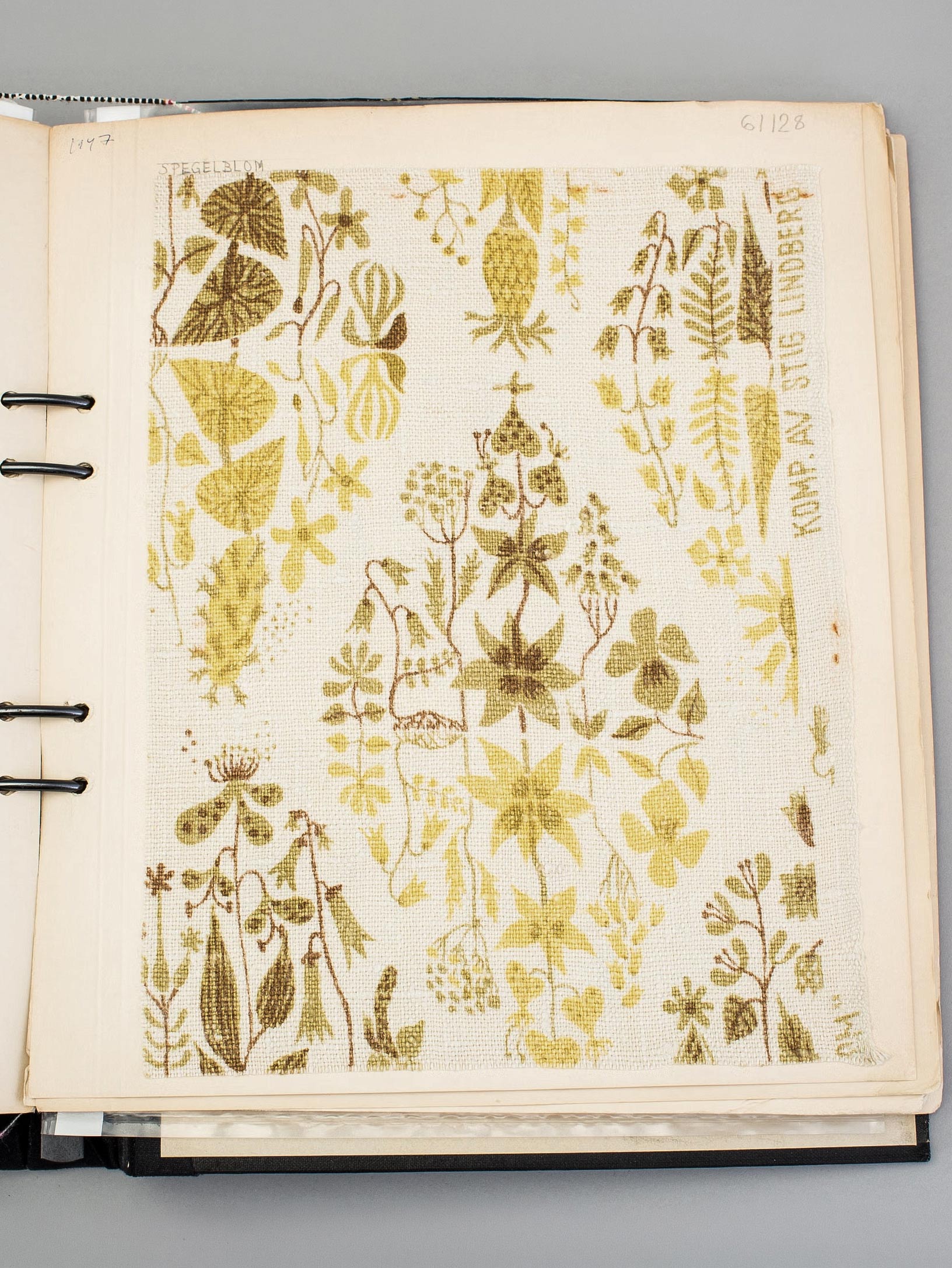
Ceramics remained central to Lindberg’s career, but his practice was never confined to clay. From 1947 to 1949, he designed glass for Målerås and textiles for Nordiska Kompaniet, where patterns such as Fruktlåda and Lustgården translated his graphic imagination into printed cloth.
Plants, animals, figures, and abstract forms recur across these textiles, often densely arranged and transformed through repetition. The movement from drawing to pattern—and from pattern to object—became one of the constants of his work.
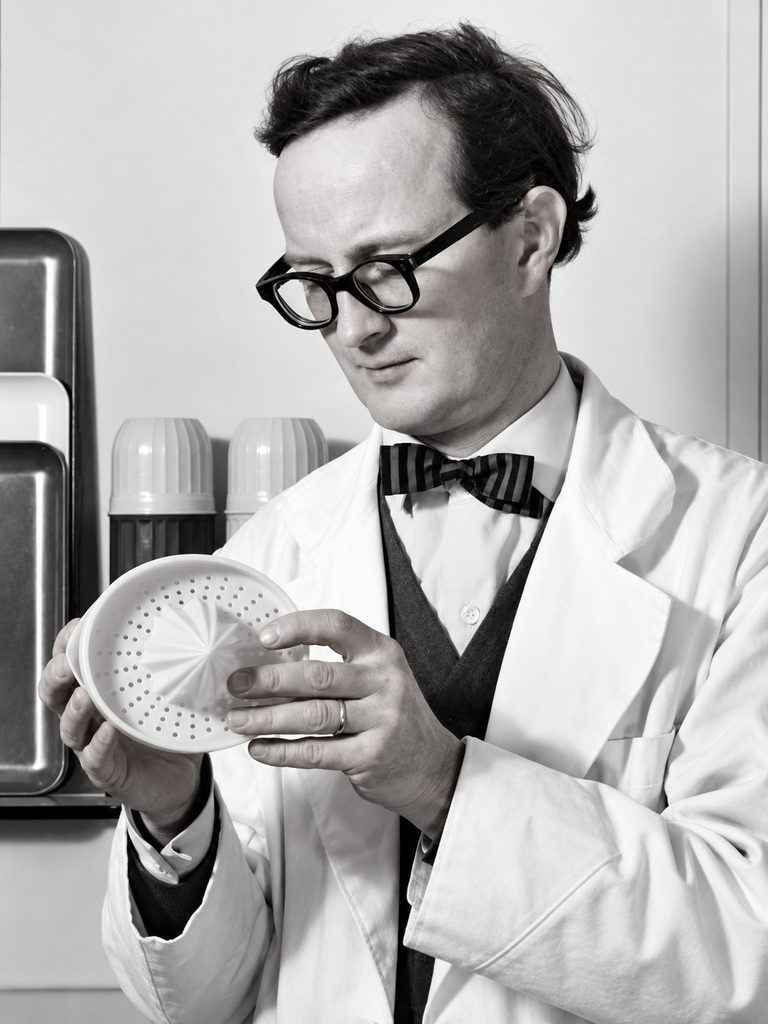
Lindberg was equally receptive to materials with little connection to traditional craft. His Lemon Squeezer of 1951, now in the collection of The Museum of Modern Art in New York, was made in plastic. Its presence alongside his ceramics reveals the breadth of his approach to postwar design: the material mattered less than what could be done with it.
His practice also encompassed children’s books, graphic design, television sets, packaging, playing cards, and other industrial objects. These were not isolated departures from his work in ceramics, but extensions of the same curiosity about how images and objects enter everyday life.
Designing for Everyday Life
In 1957, Lindberg left his position as artistic director at Gustavsberg and became head teacher at Konstfack, where he remained until 1970. He would later return to the artistic leadership of Gustavsberg from 1972 to 1980.
By then, many of the conditions that had shaped his early career—industrial expansion, new materials, and the construction of a modern Swedish domestic culture—had changed. His central proposition had not.
Lindberg refused the assumption that usefulness required visual neutrality. His objects belonged to familiar routines: pouring coffee, setting a table, squeezing a lemon, opening a book. What distinguished them was not the invention of new rituals, but the transformation of existing ones through form, image, color, and pattern.
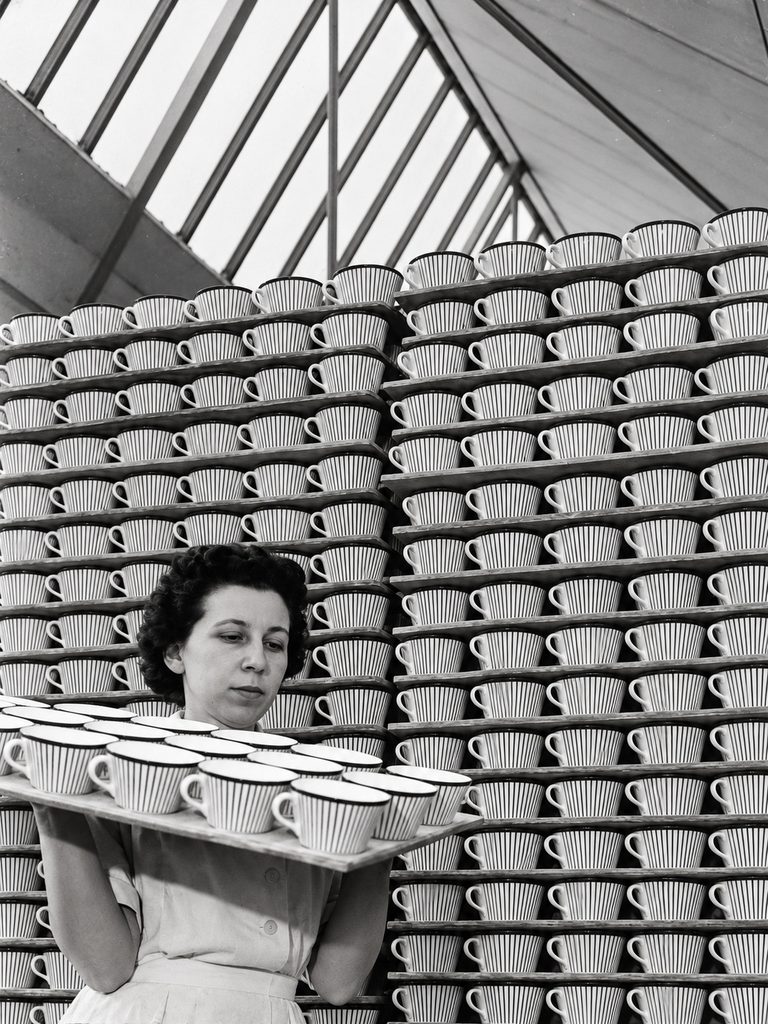
This is also what makes his work more than a recognizable chapter in the history of Scandinavian style. Lindberg understood mass production as a means of distributing visual culture. The factory could reproduce an object thousands of times without eliminating humor, irregularity, or imagination.
Today, his work is represented in the collections of Sweden’s Nationalmuseum and The Museum of Modern Art in New York, while designs including Spisa Ribb, Adam, and Berså continue to circulate decades after their introduction.
Their familiarity can obscure how radical the underlying proposition once was. Lindberg did not make modernism less modern by introducing ornament, humor, or imagination. He demonstrated that these qualities could belong to modernity itself. The wonder was already in the everyday.
Explore Stig Lindberg’s designs at Artefact.
Sources and Further Reading
Eronn, Gisela. Stig Lindberg: Tusenkonstnären. Stockholm: Norstedts, 2003.
Linder, Karin, ed. Stig Lindberg. Nationalmusei utställningskatalog 649. Stockholm: Nationalmuseum, 2006.
Palm, Magnus, ed., with Viveca Carlsson, Petter Eklund, Linda Larsson-Levin, and Thomas Lindblad. Stora boken om Stig Lindberg: Porslin, keramik, industridesign och textil. Stockholm: Egmont Publishing, 2016.
Nationalmuseum, Stockholm. “Stig Lindberg.” Collections.
Nationalmuseum / Gustavsbergs Porslinsmuseum. The Joyful World of Stig Lindberg. Exhibition, 2026–2027.
The Museum of Modern Art, New York. “Stig Lindberg.” Collection, Department of Architecture and Design.
The Museum of Modern Art, New York. “Stig Lindberg. Lemon Squeezer. 1951.” Collection, Department of Architecture and Design.