
HARALD NOTINI
BETWEEN OBJECT AND ATMOSPHERE
Across lighting, glass, and interiors, Harald Notini explored how an object could shape the space around it. Moving from Swedish Grace through Functionalism to Swedish Modern, he developed a language in which proportion, material, and light became inseparable.
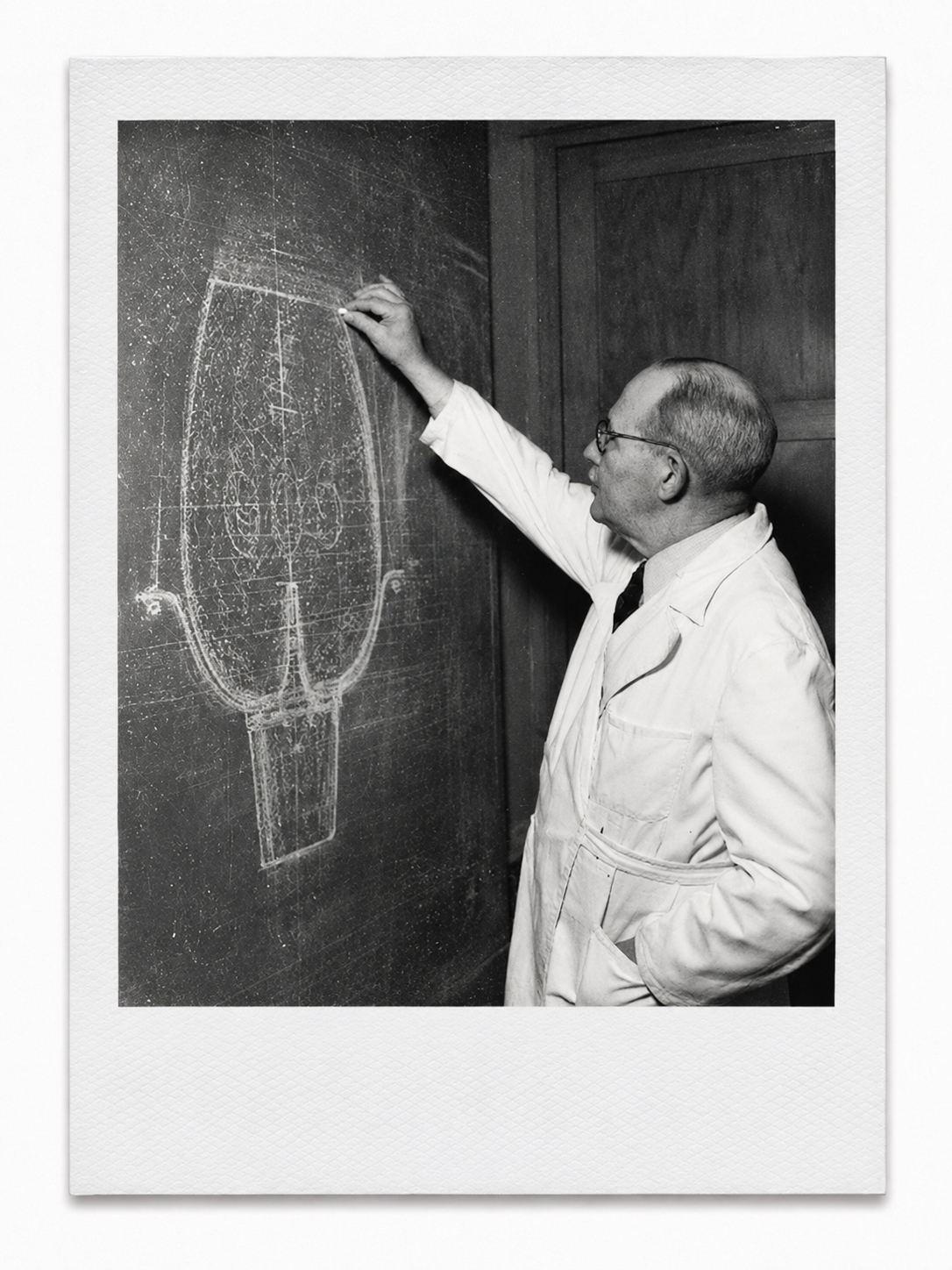
Rooted in Craft
Harald Notini (1879–1959) was born in Stockholm into a family closely connected to the decorative arts. His father, Axel Notini, was a sculptor and ornamental craftsman, introducing him early to a tradition in which making and artistic expression were closely intertwined.
Notini studied at Högre konstindustriella skolan in Stockholm and continued his artistic education in France and Germany. His background in sculpture and interior design would remain visible throughout his career.
Even as Swedish design moved away from ornament, Notini retained a sculptor’s concern for volume and silhouette. Modernism simplified his vocabulary, but it did not diminish the physical presence of his objects.
Böhlmark’s, Pukeberg and the Possibilities of Glass
In 1916, Notini joined Arvid Böhlmarks Lampfabrik, becoming artistic director for the company’s Stockholm factory as well as its glass production at Pukeberg. His appointment came at a moment when Swedish manufacturers were increasingly bringing artists and designers into industrial production.
Böhlmarks was among Sweden’s significant lighting manufacturers during the first half of the twentieth century. For Notini, the company offered a setting in which artistic ideas could be translated into manufactured objects, bringing questions of material, function, and production into close contact.
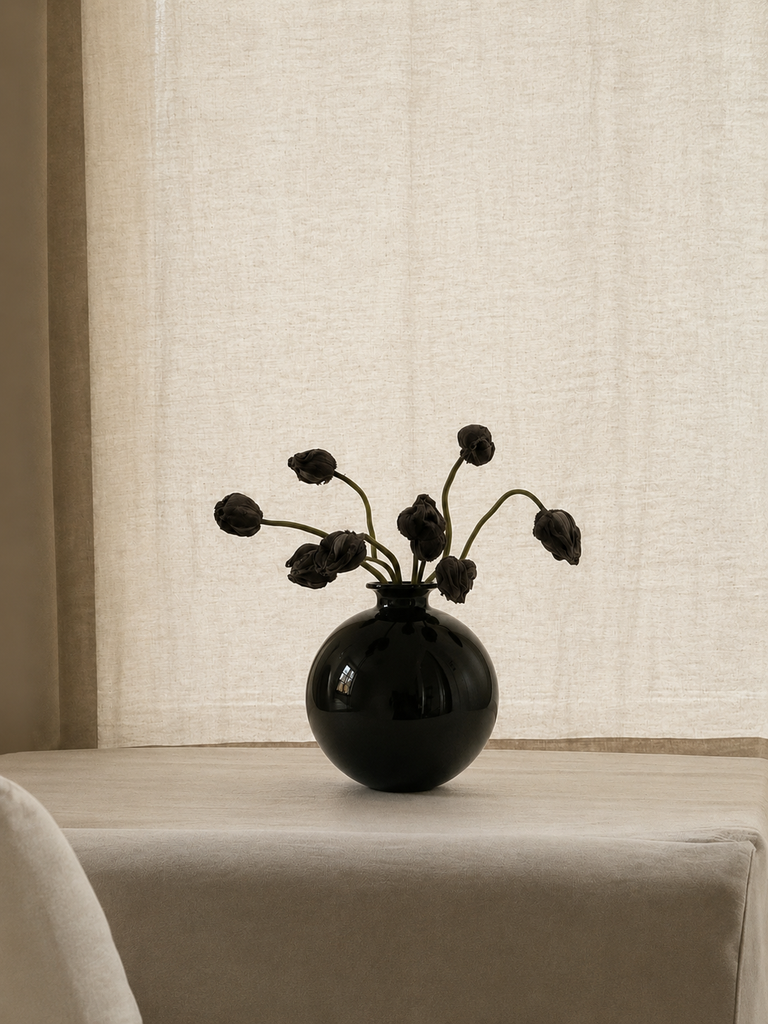
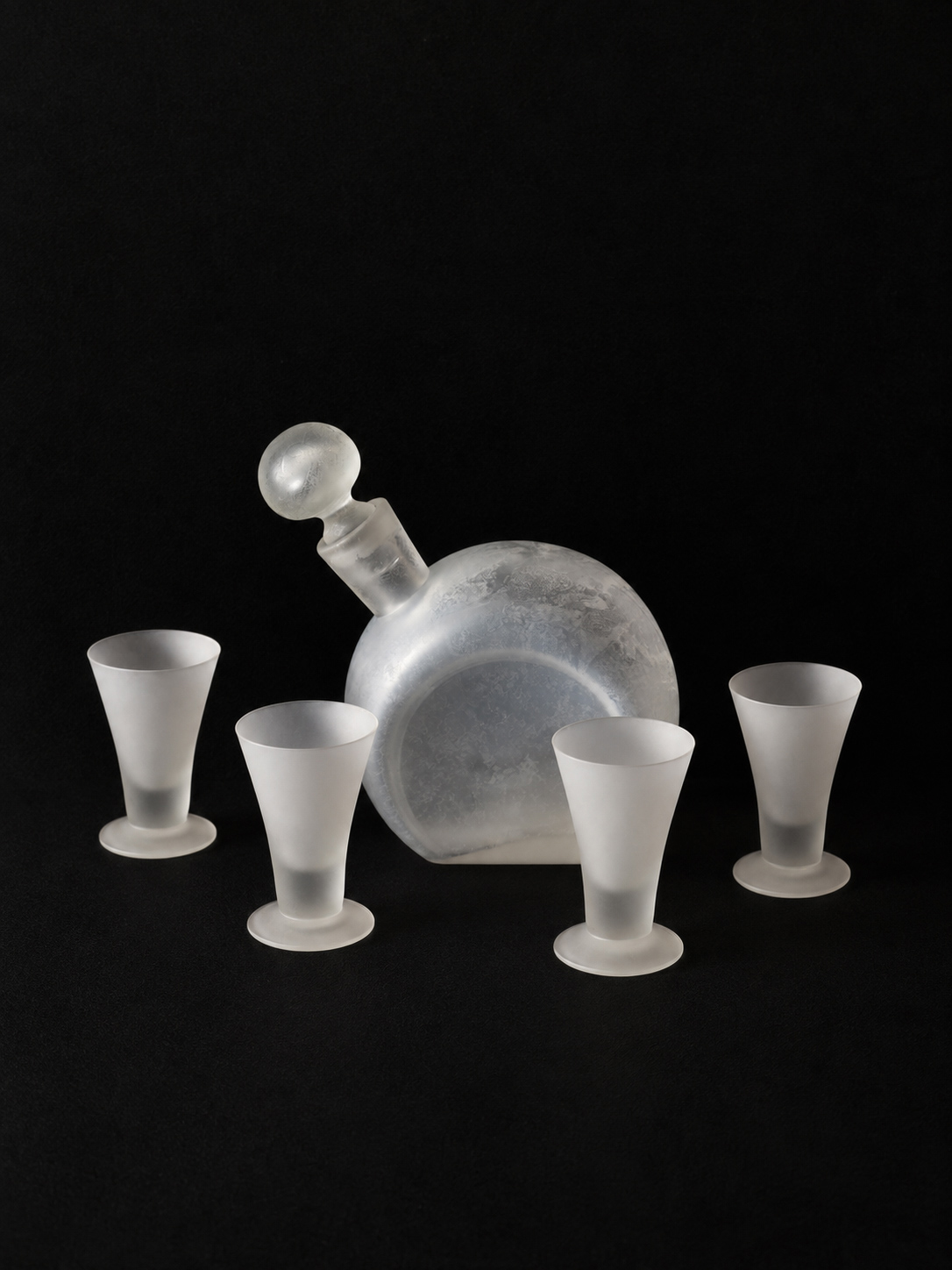
Pukeberg extended these possibilities through glass. The material could transmit light, obscure it, reflect it, or appear almost solid, allowing Notini to explore the shifting relationship between form and illumination.
Designing with Light
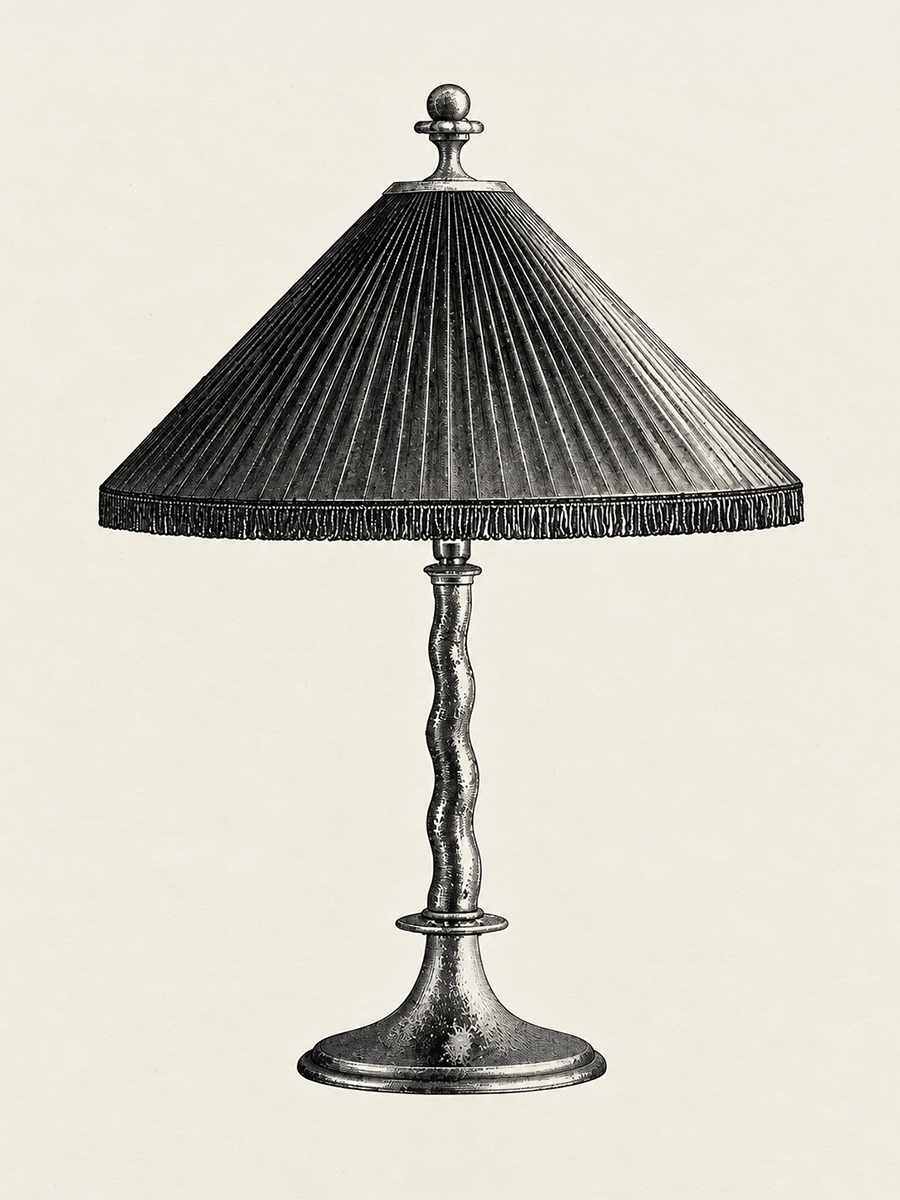
A lamp presented a particular problem: it had to function as an object while simultaneously producing an effect beyond itself. Light transformed the surrounding space, making illumination as important as the physical form of the lamp.
Notini used glass and metal to negotiate between these roles. Frosted and diffused glass could conceal the bulb and soften its intensity, while shades and reflectors could direct illumination toward a table, wall, or ceiling.
His sculptural background becomes particularly legible here. His lamps can be understood as compositions of mass, void, surface, and illumination—but unlike sculpture, their boundaries extend into the room when switched on. The object ends. The light does not.
Between Ornament and Reduction
During the 1920s, Notini’s work participated in Swedish Grace, a distinctly Swedish interpretation of neoclassicism. Classical symmetry and balanced proportions were combined with simplified ornament, fine materials, and careful craftsmanship, creating a restrained form of elegance suited to modern interiors.
The Stockholm Exhibition of 1930 marked a decisive change. Functionalism replaced historical references and decorative refinement with geometry, utility, standardisation, and forms adapted to industrial production. Architecture, furniture, and objects were presented as interconnected parts of a new conception of modern life.
Notini’s work subsequently became increasingly geometric and restrained. Ornament receded and construction became more legible, yet proportion and material refinement remained central. Modernism changed his vocabulary without entirely severing it from what came before.
Toward a Warmer Modernism
By the 1940s and 1950s, the harder geometries of early Functionalism had softened into what became internationally associated with Swedish Modern. Clean lines and functional principles remained, but natural materials, tactile surfaces, organic curves, and craftsmanship brought warmth to modernist restraint.
Notini’s work followed this development. Brass, glass, wood, and leather introduced material richness to increasingly reduced forms, demonstrating how simplicity could coexist with texture, atmosphere, and sensuality.
Across these stylistic shifts, Notini maintained a sensitivity to material and proportion. What changed was the vocabulary around them—from the refined classicism of Swedish Grace, through the geometric reduction of Functionalism, to the warmer materiality of Swedish Modern.
Shaping Light
Notini’s significance lies not only in the forms he designed, but in the way those forms mediated light. Through reflection, diffusion, direction, and shadow, illumination became part of the architecture of an interior rather than simply a practical necessity.
This approach places his work within a broader development in twentieth-century Swedish lighting, where atmosphere and visual comfort became increasingly important to the experience of modern interiors. In Notini’s work, the lamp could be carefully composed as an object while its ultimate effect remained spatial.
Today, his designs are preserved in museum collections including Nationalmuseum in Stockholm. They reveal a designer for whom light was never separate from form, but the element through which form entered the room.
For Notini, light was not simply emitted by an object. It was a material through which the room itself could be shaped.
Explore Harald Notini‘s designs at Artefact.
Sources and Further Reading
Nationalmuseum, Stockholm. Harald Notini (1879–1959). Collection database.
Nationalmuseum, Stockholm. Floor Lamp, designed by Harald Notini for AB Arvid Böhlmarks Lampfabrik, 1935. Collection no. NMK 10/2016.
Bukowskis. Harald Notini (1879–1959). Bukipedia, biographical and design history entry.
AB Arvid Böhlmarks Lampfabrik. Product Catalogues, 1920s–1940s. Historical catalogues documenting lighting designed and produced during Harald Notini’s tenure.
Boet: Månadsskrift för hemkultur, hantverk och konstindustri. Gothenburg, 1935, pp. 212–213.
Brunnström, Lasse. Swedish Design: A History. London: Bloomsbury Academic, 2018.
Creagh, Lucy. Swedish Modern: A Movement Towards Sanity in Design. Stockholm: ArkDes, 2013.
Fiell, Charlotte, and Peter Fiell. Scandinavian Design. Cologne: Taschen.
Nationalmuseum. Swedish Grace: Art and Design in 1920s Sweden. Stockholm: Nationalmuseum.
Rudberg, Eva. The Stockholm Exhibition 1930: Modernism’s Breakthrough in Swedish Architecture. Stockholm: Stockholmia Förlag.